
TL;DR:
Slavery in the northern colonies and New France functioned on the same legal premise as plantation slavery elsewhere: people reduced to property. Though smaller in scale and more geographically dispersed than the large cash-crop plantations of the American South and Caribbean, northern enslavement embedded Black and Indigenous labour into domestic life, artisanal production, and small-scale agriculture. This diffuse arrangement obscured the systemic brutality of commodification while producing intimate forms of control—daily surveillance in households, legal vulnerability, and economic dependency—that rigidly constrained life chances and social mobility.
Imperial wars and policies repeatedly converted promises of freedom into instruments of control. During the American Revolution thousands of Black people were enticed by British proclamations of emancipation and evacuated to the Maritimes, only to encounter discriminatory land grants, marginal plots, and delayed titles that reproduced economic precarity. The deportation of Jamaican Maroons to Nova Scotia exemplified another imperial tactic: exile and climate displacement intended to fracture cohesive Black polities. In each case, the British state used migration and resettlement as strategic levers, destabilizing Black communities while avoiding commitments to long-term equality.
From the mid-19th century onward, Black migrants and refugees engineered alternative civic economies and institutions to survive and thrive under tenuous legal protections. Settlements such as Buxton and Dresden combined cooperative finance, municipal discipline, and local industry to create self-sustaining towns; newspapers and itinerant leaders linked dispersed communities into continental networks of mutual aid and political advocacy. Military service—from Black Loyalists to the No. 2 Construction Battalion in World War I—revealed both the willingness to claim civic belonging through sacrifice and the persistent second-class treatment that followed, highlighting the gap between formal inclusion and substantive equality.
Urban policymaking and municipal omission further entrenched racial inequality in the 19th and 20th centuries. Africville’s systematic denial of services and concentration of environmental hazards demonstrates how planning and zoning functioned as mechanisms of dispossession, culminating in forced removals that destroyed generational wealth and community continuity. Contemporary recognition and commemorative efforts have expanded public memory, but enduring disparities in health, education, housing, and criminal justice show that symbolic gestures must be paired with race-conscious, material remedies—land restitution, targeted investment, and legal reform—to dismantle anti-Black structures built over centuries.
The Northern Enslavement: Dispersion and Resistance (17th–18th Centuries)
Though numerically smaller than Caribbean and Southern plantation systems, slavery in New France and the early British North American colonies rested on the same juridical premise: people treated as property. That legal status—codified through purchase, sale, inheritance, and court decisions—made Black and Indigenous bodies fungible economic inputs. Because enslaved labour in the North was dispersed across households, shops, and small farms rather than concentrated on monocultural plantations, historians have sometimes underplayed its severity; yet dispersal only masked the depth of commodification and the everyday violence of domination.
The Mechanics of Northern Slavery
Enslaved people in the northern colonies filled diverse, indispensable roles. Artisans and skilled labourers—blacksmiths, coopers, carpenters—kept colonial commerce and shipping functioning. Domestic servants sustained elite households in Quebec City, Montreal, and Halifax, doing intimate and intensive work that left them constantly visible but legally vulnerable. On small farms, enslaved agricultural labourers cleared forest, planted mixed crops, and performed the year-round tasks that allowed subsistence and market-oriented households to survive. The story of Olivier Le Jeune, recorded in 1628 and purchased by merchant Jean de Lauzon, captures how closely enslaved labour was woven into the fabric of early colonial economies: rather than vast plantations, enslaved people were often the solitary Black presence within predominantly white households—intimately involved in daily life but isolated and legally expendable.
Everyday resistance and the formation of social bonds complicate assumptions that isolation meant submission. Enslaved and free Black people cultivated kinship links, informal networks of aid, and ritual and spiritual life that undercut the masters’ claim to absolute authority. These networks—sometimes covert and sometimes public—served as channels for information, escape plans, and mutual support. Though less visible than mass rebellions on plantations, this distributed resistance created a durable social infrastructure that later generations drew on when pursuing migration, community formation, and legal redress.
The Black Loyalists: Betrayal and the Birth of Birchtown (1783)
The American Revolution transformed military opportunism into a route toward freedom. Lord Dunmore’s Proclamation and subsequent British promises offered emancipation in exchange for service or flight from rebel masters. The British tactic was strategic: weakening the rebellion by removing enslaved labour. Thousands of Black people accepted the risk. After the war, roughly 3,000 were evacuated to Nova Scotia and New Brunswick as refugees of empire. Many of these Black Loyalists—soldiers, laborers, and community leaders such as Richard Pierpoint—sought to convert military service into land, political autonomy, and economic stability.
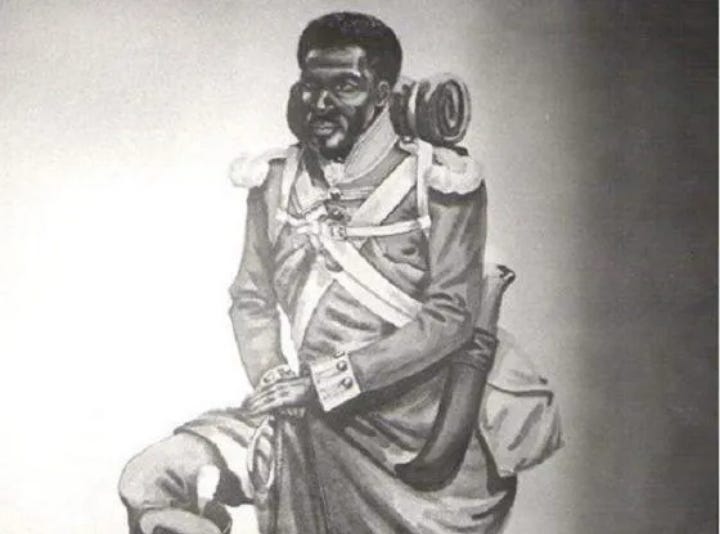
The arrival of these refugees revealed the gulf between imperial promise and colonial practice. The newcomers faced brutal winters, the near-impossible task of clearing virgin forest, and the need to build housing and infrastructure from scratch. They organized rapidly: churches, mutual aid societies, and schools were among the civic pillars they raised. But the land-grant system—presented publicly as equal treatment—was systematically corrupted. Black Loyalists experienced long delays, received inferior and smaller lots often on marginal terrain, and were frequently denied clear titles. Without deeds, families could not build equity, secure credit, or stabilize agricultural production; many were forced into precarious wage labor or quasi-indentured positions, effectively trapping them in poverty. Thomas Peters’s 1791 journey to London to press the Crown for justice highlights both the audacity of Black political claim-making and the imperial reluctance to permit a free, land-owning Black citizenry within British North America.
The Jamaican Maroons: Exile as a Weapon (1796)
The deportation of Jamaican Maroons to Nova Scotia in 1796 exemplifies how empire weaponized climate and displacement. The Maroons—communities that had fought for and won degrees of autonomy in Jamaica—were exiled after British suppression of uprisings and negotiated treaties were broken. Transported from a tropical island to the cold, rocky shores of Halifax, they were intentionally removed from the ecological and social conditions that had sustained their autonomy.

Despite the climate shock and official neglect, Maroon cohesion proved resilient. They maintained internal governance, resisted coercive assimilation, and organized politically to resist being reduced to itinerant laborers in the Maritimes. Their refusal to dissolve as a people forced the British to re-evaluate the practicality of keeping them there; by 1800 many Maroons were re-routed to Sierra Leone. Their transatlantic passage underscores a recurrent theme: Black communities acted transnationally, moving strategically in response to imperial pressures and carving out new political and social horizons when the British project sought merely to displace them.
The Underground Railroad: Engineering Self-Sustaining Municipalities (1830s–1860s)
After abolition in the British Empire (1833) and especially following the Fugitive Slave Act (1850) in the United States, Canada became a legal refuge for freedom seekers. But arrival did not equal security. Tens of thousands who crossed the border in the nineteenth century confronted the urgent material task of making places where families could survive and thrive. Rather than becoming passive beneficiaries of charity, many freedom seekers deliberately constructed durable, self-governing settlements.
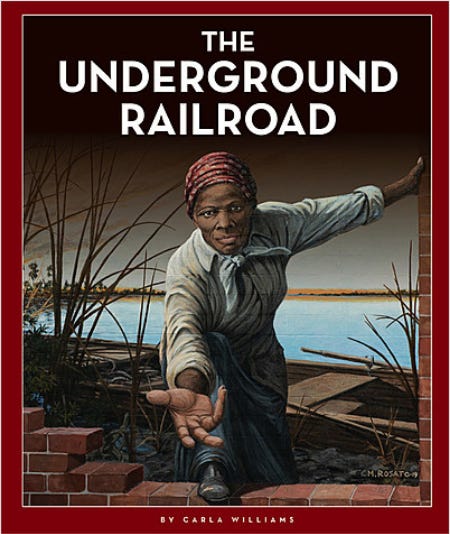
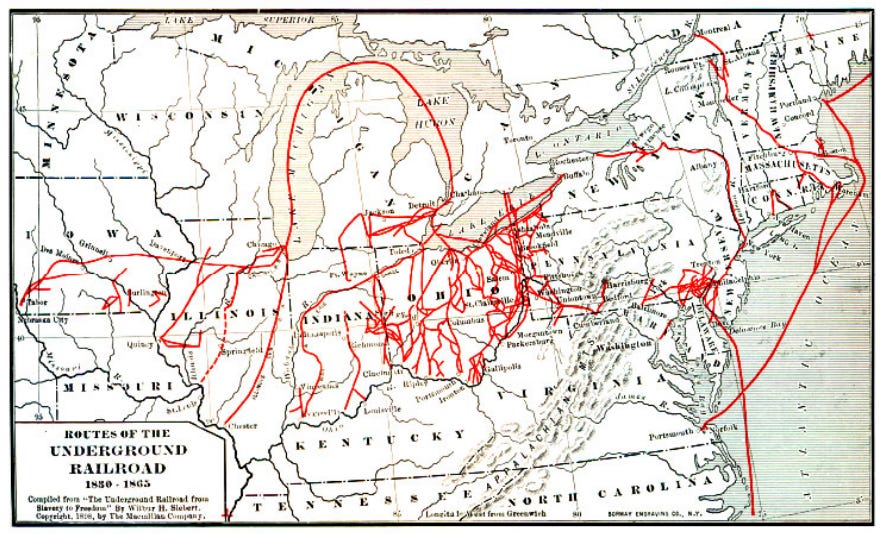
Buxton (Elgin Settlement) is illustrative: founded in 1849 by Rev. William King, it combined cooperative finance, careful land planning, and municipal discipline. Joint-stock arrangements bought large tracts that were subdivided for families; building codes and communal standards—sometimes framed as “respectability”—were deployed as practical strategies to resist discrimination and to demonstrate civic competence. Economically, settlements cultivated closed-loop systems—sawmills, brickyards, and gristmills—that reduced dependence on hostile local markets. Intellectually and politically, the settlements were connected through newspapers and itinerant leaders: Mary Ann Shadd Cary’s Provincial Freeman provided a continent-spanning forum for debate, warnings, and organization. Similar experiments at Dresden, Queen’s Bush, and elsewhere show that Black freedom in the North was actively manufactured: local governance, cooperative enterprise, and cultural institutions were essential instruments of survival.
The No. 2 Construction Battalion: Bleeding for a Nation That Despised Them (1916–1920)
World War I forced a confrontation between imperial rhetoric and racial practice. Black Canadians pressed to enlist; the initial institutional response was exclusion. After persistent advocacy, the government authorized the No. 2 Construction Battalion in 1916—an all-Black unit relegated to labor rather than combat. Sent overseas to support the war effort, these men felled timber, built rail lines, ran sawmills, and performed backbreaking and dangerous engineering tasks under poor conditions.
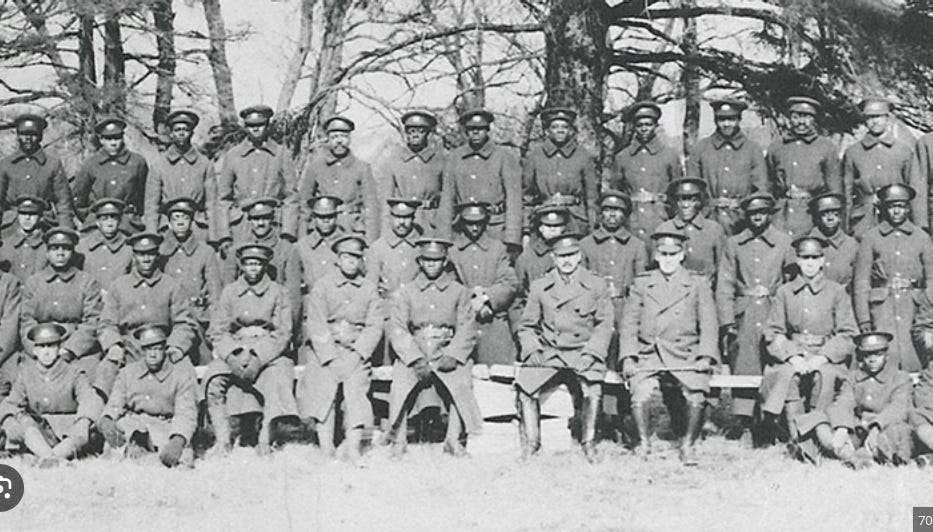
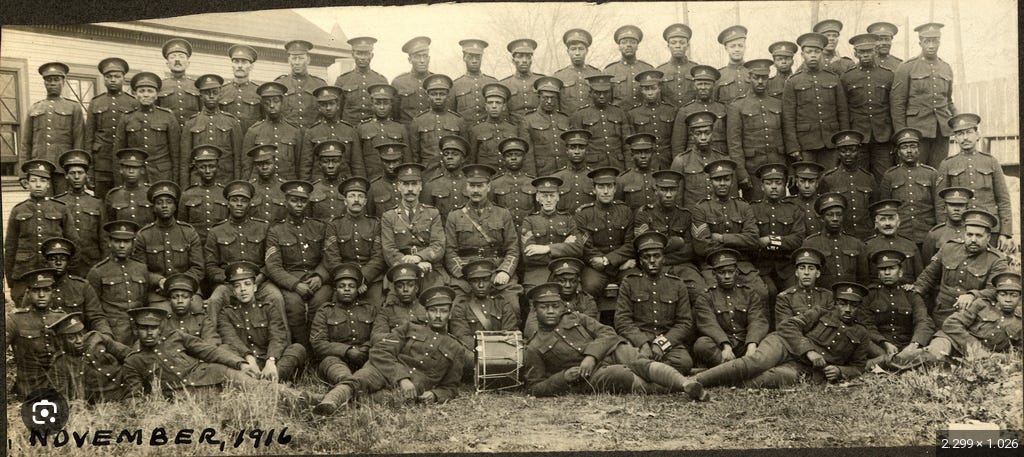
Their service was materially vital to the Allied war effort yet symbolic of ongoing second-class citizenship: denied proper equipment, frontline recognition, and equal post-war treatment, they nonetheless used military service to insist on political belonging. Leaders like Major William A. White symbolized both the limitations and possibilities of that claim—Black Canadians were prepared to sacrifice for a nation that had consistently denied them full membership.
Africville: The Weaponization of Urban Planning (1840s–1969)
Africville’s history is an epitome of how planning and municipal omission can become instruments of racial dispossession. Settled in the mid-19th century, Africville’s residents paid property taxes and formed a close-knit community anchored by the Seaview African Baptist Church. For over a century, however, Halifax systematically denied the community basic services—running water, sewage, garbage collection, paved streets—while permitting the placement of polluting and demeaning facilities at its margins: a fertilizer plant, railway lines, a jail, an infectious-disease hospital, and ultimately a landfill. That deliberate externalization of urban harms depressed property values and created a narrative of squalor that officials then used to justify “urban renewal.”
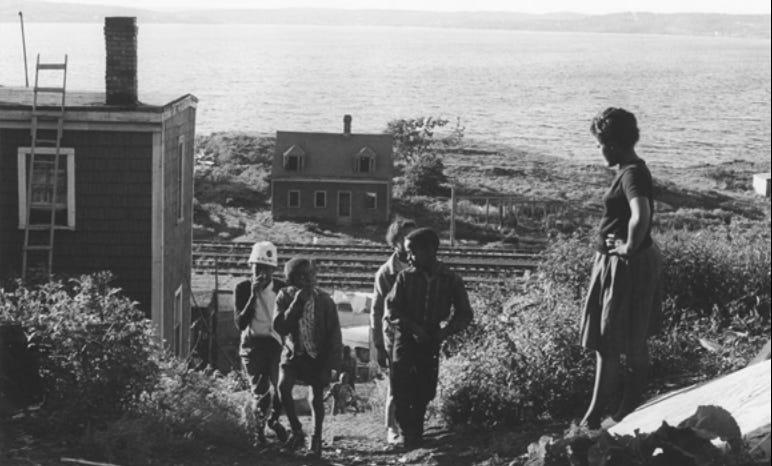
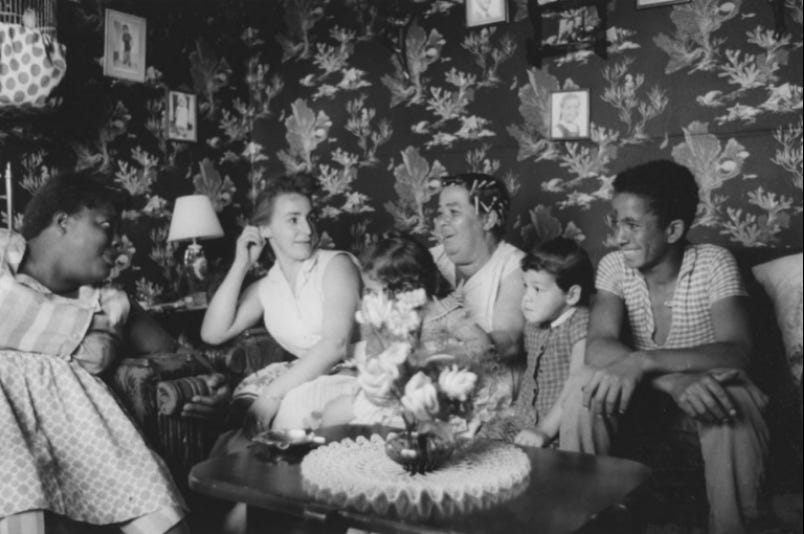
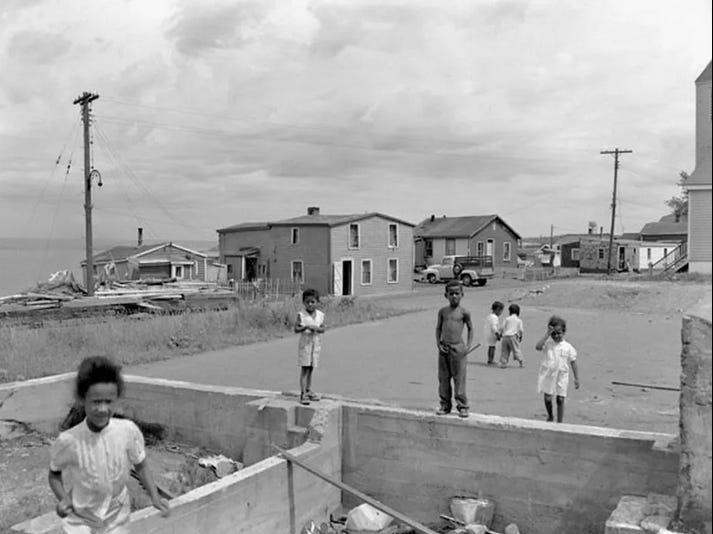
The 1960s removals were brutal: homes were razed, the church bulldozed, families transported to inadequate public housing and scattered across the city. The loss was not only physical but generational economic capital and community continuity. The late apology and partial restitution by Halifax in 2010 cannot fully repair the material and psychic damages; Africville remains a cautionary case of how municipal power can be wielded to dismantle a people’s rootedness.
Contemporary Echoes: From Symbolic Acknowledgement to Structural Equity
Modern recognition—Black History Month, commemorations of figures like Portia White and Lincoln Alexander, archival projects—has opened space for memory. But remembrance alone cannot dismantle persistent inequalities that trace lineally to colonial exclusion. The structural legacies are visible in health disparities, over-representation in the criminal-justice system, and educational tracking that constrains upward mobility. Reparation-minded policy must therefore be concrete: targeted capital for Black-owned businesses and land restoration programs to counter centuries of denial; investments in health and education that directly reduce measured disparities; and curriculum reform that treats Black history not as an adjunct but as integral to national formation.
The Gap Between Symbolism and Substance
Symbolic recognition—renaming schools, erecting plaques, or marking anniversaries—can signal a shift in public memory, but it often stops short of changing material conditions. A school bearing the name of a Black trailblazer may honor an individual while the students who pass through its doors continue to face under-resourcing, curricular streaming, and differential discipline. When commemoration is treated as equivalence to redress, it risks becoming performative inclusion: visible proof of good intent that leaves underlying institutional practices untouched. The danger is twofold. First, symbolism can soothe public conscience and reduce political pressure for concrete change. Second, it can produce an “exceptionalist” narrative where celebrated figures are presented as anomalies—heroes who “beat the odds”—rather than as evidence of structural barriers that persist for the majority. Framing leaders like Lincoln Alexander as singular successes can obscure the systemic obstacles they overcame and the continued constraints on access to land, capital, and political power for many Black Canadians.
Archival recovery and public memory are crucial, but archives alone cannot remedy material loss. The documentation of Africville’s destruction, the listing of property deeds, and the preservation of oral histories make visible a crime of municipal policy and racialized neglect; yet without land restitution, direct compensation to descendants, or institutional investment in the displaced community, the archive risks becoming a mausoleum for generational wealth that was stripped away. The archival record can inform justice—establishing provenance, proving patterns of official negligence, and supporting legal claims—but only if coupled with reparative mechanisms that restore opportunity and security rather than merely memorialize absence. Otherwise, archival work functions mainly as testimony, valuable for truth-telling but insufficient for reversing the economic and social harm produced across generations.
Structural Legacies as Living History
The material inequalities visible today are not vestiges of a concluded past but active legacies shaped by continuous policy choices. Centuries of uncompensated labor, combined with discriminatory land allocation and practices akin to redlining, created a persistent wealth gap that diminishes home ownership rates and intergenerational transfer of capital in Black communities. Environmental racism—deliberate siting of landfills, heavy industry, and polluting infrastructure near Black neighborhoods—produces measurable health disparities, including elevated rates of respiratory illness and cancer where exposure is greatest. The diffuse controls that once operated through household surveillance and labor regimes have been transmuted into modern systems of social control: biased school streaming that channels students away from post-secondary trajectories, policing practices that over-surveil Black neighborhoods, and sentencing patterns that yield disproportionate incarceration. Treating these patterns as “living history” recognizes that exclusionary outcomes are reproduced by institutions operating under contemporary policy logics, not merely by residual prejudice.
Concrete Pillars of Reparation-Minded Policy
Addressing these interlocking harms requires a shift from race-neutral tinkering to race-conscious, material interventions that restore capital, health, and political voice. Economic restoration should include targeted capital flows—grants, low-interest or forgivable loans, and tax incentives—to overcome the historical denial of credit and business opportunity; community land trusts and direct land restitution must be tools to rebuild property ownership and secure communal spaces for development. Health equity demands investment in Black-led clinical services, environmental remediation where harm can be demonstrated, and funding for longitudinal studies that tie exposure to outcomes in order to justify compensation and prevention. Educational remedies must end racially biased tracking, fund culturally relevant curricula, and underwrite scholarships and academic supports linked to measurable post-secondary access outcomes. Legal reforms should mandate auditing of zoning, sentencing, and employment laws to excise provisions and practices that perpetuate racialized disadvantage, accompany those audits with enforceable timelines, and create independent oversight to ensure compliance. Finally, curricular integration should move Black history out of tokenized commemoration into core national education—teaching it year-round as constitutive of the nation’s development so that public memory aligns with policy imperatives for repair rather than mere recognition.
The Bottom Line: Reparations are not a “gift” or a “handout”; they are the settlement of a long-standing debt. Until the material disadvantage produced by centuries of enslavement and segregation is balanced, symbolic gestures will continue to ring hollow for the communities they intend to honor.
Conclusion
Racism against Black people has been a persistent structuring force in Canada’s development, shaping who could access land, capital, services, and citizenship. Legal doctrines and quotidian practices that treated Black lives as expendable enabled dispossession, unequal land allocation, and labor exploitation; municipal policies and planning decisions concentrated environmental harms and denied basic services, reinforcing segregation and eroding generational wealth. Racialized exclusions in education, healthcare, employment, and the justice system have perpetuated disparities established under colonial and imperial regimes. Even gestures of recognition—commemorations, anniversaries, and symbolic apologies—fall short without concrete, race-conscious remedies: land restitution and reparative financing, targeted investments in Black health and education, anti-racist policy in urban planning, and legal reforms that remove structural barriers. Confronting anti-Black racism thus requires treating it as an active institutional force to be dismantled through specific, accountable measures that restore material equity and safeguard dignity.
Black Canadians: The Overlooked Pioneers of Canada’s Diversity

TL;DR: Long before 20th‑century immigration waves from Asia, Europe, and the Middle East reshaped Canada’s cities, Black communities were already establishing roots—working, resisting, building institutions, and shaping the social and cultural life of the country. From Mathieu da Costa in the early 1600s to Black Loyalists, Jamaican Maroons, and Undergro…
Borderlands Lost: How Force and Ultimatum Redrew British North America’s Map

TL;DR: Three themes emerge: persistent U.S. military pressure, repeated British strategic withdrawals, and the steady erosion of territory once administered from British North America. Across the 19th century and into the 20th, contested borderlands and maritime points were taken from Canadian-administered control through force, threat, or occupation—oft…
The Two Sides of the Corsairs

TL;DR: Barbary and Christian corsairs were state‑sanctioned privateers who dominated Mediterranean maritime predation for centuries—attacking shipping, raiding coasts, and fueling an economy built on prize capture, ransom, and slavery.
Fascist Symbolism in USA

TL;DR: Fasces—bundles of rods, sometimes with an axe—are classical Roman symbols of collective authority and lawful force. Adopted widely in U.S. government architecture and art from the 18th century onward, they appear in the Capitol, Lincoln Memorial, Oval Office, Supreme Court and other civic spaces. Though their literal link to Roman republican ideal…