
TL;DR: While not officially named in the original doctrine to maintain diplomatic flexibility, the UAE serves as the financial and logistical fuel for the Hexagon. By acting as the "unnamed node," Abu Dhabi provides the necessary capital and stable hubs to bypass the old, volatile land-power gatekeepers.
Why did the UAE remain the "Unnamed Arab Node"?
In the unveiling of the Hexagon of Alliances on February 22, 2026, Prime Minister Netanyahu referred to "unnamed Arab nations." This strategic ambiguity was a calculated choice. It allows the UAE to participate in the highest levels of security and economic coordination without triggering immediate friction within the Arab League or with regional rivals like Iran.
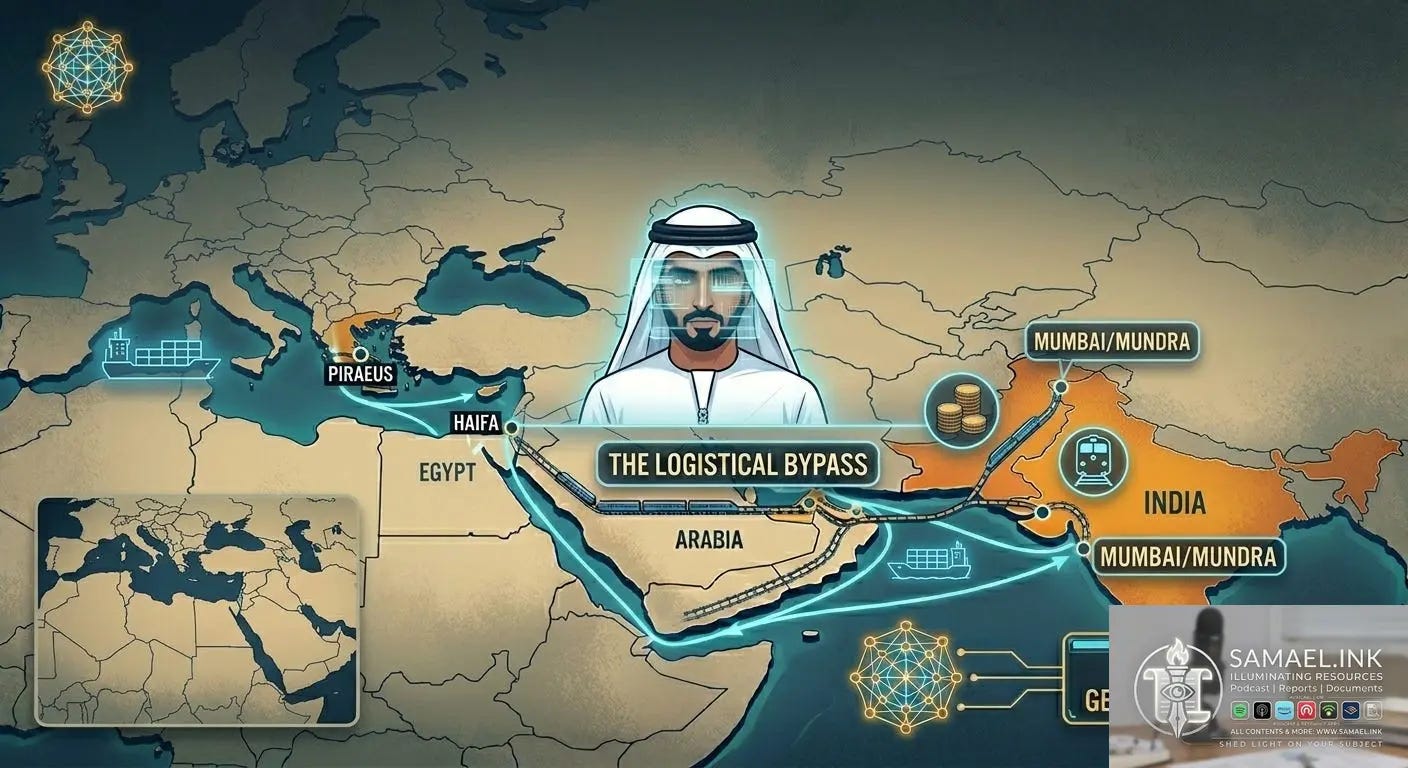
However, the reality on the ground is far more direct. As the primary financier and logistics hub for the India-Middle East-Europe Economic Corridor (IMEC), the UAE is the essential bridge between the Indian Ocean and the Mediterranean. Through the January 2026 UAE-India defense and trade pacts, Abu Dhabi has effectively underwritten the physical bypass of the "Baghdad Overwrite"—favoring a high-speed maritime-rail circuit that moves goods from India to Europe with unprecedented efficiency.
How does the "Shadow Alliance" protect regional capital?
The UAE’s role is that of a Financial Anchor. By coordinating through the Hexagon, it secures its massive investments in global ports and energy infrastructure. The alliance provides a security umbrella—leveraging Israeli technology and Indian naval presence—to protect Emirati hubs like Jebel Ali and Fujairah.
This "Shadow Alliance" model allows for:
Trust Corridors: Establishing physical routes where security is guaranteed by shared economic survival rather than shifting political treaties.
Capital Resilience: Ensuring that even in times of regional tension (such as the recent Operation Epic Fury), the core trade circuits remain operational and insulated from market shocks.
For the UAE, the Hexagon is a pragmatic expansion of the I2U2 framework (India, Israel, UAE, USA), shifting the focus from diplomatic dialogue to the hard reality of securing the movement of capital and commodities across the 2026 global map.