
TL;DR:
The relationship between Winston Churchill and Major General Orde Wingate was a profound exercise in Strategic Heresy, where the Prime Minister empowered a "madman" to bypass the inertia of the British military establishment. To Churchill, Wingate represented the raw "offensive spirit" required to reclaim the initiative in the Far East; to Wingate, Churchill was the only sovereign with the Gideon-like vision to understand that victory lay in the hands of the inspired few. This partnership "laundered" Wingate's irregular tactics—specifically the Chindit expeditions—into official British strategy, proving that in times of total war, the "Inspired Irregular" can become the ultimate weapon when backed by absolute political authority. This bond ensured that the "hardware" of modern conflict was not merely a matter of supply lines, but of the psychological "shaking" of the enemy's morale. Make sure to check out our other article here. Also checkout other related authors who contribute to these forgotten episodes in World Politics
The First Meeting: The “Gideon” Impression
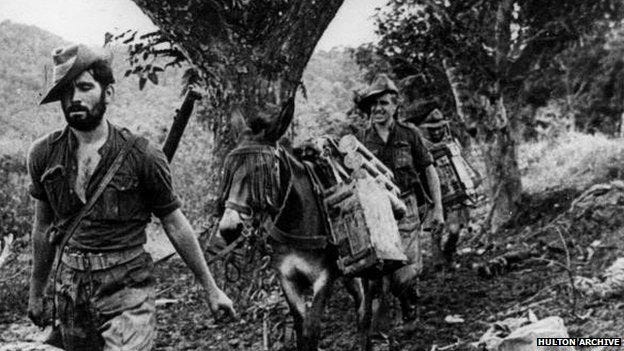
The inception of their bond can be traced back to the Gojjam Highlands of Ethiopia in 1941. While the British military establishment in Khartoum viewed the return of Emperor Haile Selassie as a secondary “sideshow,” Wingate and his sub-commander Wilfred Thesiger proved that a small, elite force—the Gideon Force—could collapse an empire.
When Wingate’s report reached 10 Downing Street, Churchill was enthralled. He had a lifelong obsession with “irregulars” (dating back to his own youth in the Boer War). In Wingate’s success against the Italians, Churchill saw a “Viper” strike that cost the British almost nothing but yielded an entire kingdom.
The Quebec Conference (1943): The Turning Point
The relationship moved from professional admiration to a “special relationship” during the Quebec Conference (codenamed QUADRANT). Churchill, frustrated by the “slow-moving” nature of the regular Indian Army in the Burma theater, summoned Wingate to London.
The Queen Mary Encounter: Churchill was so taken by Wingate’s intensity that he invited him onto the Queen Mary to meet President Franklin D. Roosevelt.
The “Showcase” Rebel: Churchill used Wingate as a diplomatic tool. By presenting this “Sword of the Spirit” to the Americans, Churchill proved that the British were not just colonial administrators, but were capable of the same “frontier grit” the Americans admired.
Direct Access: Churchill granted Wingate the rarest of privileges: a direct line of communication that bypassed the War Office. This allowed Wingate to request resources—including his own American-supplied air force—without the interference of his superior officers.
Friction with the “Regulars”
Churchill’s patronage created a firestorm within the British High Command. Generals like William Platt and Archibald Wavell resented Wingate’s “private army” (the Chindits) and his messianic tone.
The “Madman” Defense: When General Platt complained that Wingate was “mentally unstable” and “unfit for command,” Churchill famously retorted: “I wish we had more such madmen in the British Army”.
Institutional Jealousy: The regular army hated that Wingate’s Chindits were given the best equipment and the highest priority for air supply, resources they felt were being “wasted” on guerrilla experiments.
The Letter to the Widow: A “Man of Destiny”
The depth of Churchill’s feelings was only fully revealed upon Wingate’s death in a plane crash in March 1944. Churchill, usually a master of stoic statecraft, wrote a letter to Lorna Wingate that remains one of the most emotional documents of his premiership.
He lamented that the world had lost a “man of destiny” and compared Wingate’s spirit to the biblical heroes of old. To Churchill, Wingate wasn’t just a soldier; he was a proof of concept that the “Imperial Formula” could still produce giants in an age of machines.
