
The Nile Paradox: The Tripartite Strategy of Aksumite-Mamluk Diplomacy
The historical communication between Highland Christian sovereigns and the Sultanates of Egypt was defined by the “Nile Paradox,” a high-stakes geopolitical "laundering" where theological adversaries managed a persistent “double hostage” architecture. The Negus (ንጉሠ ነገሥት, niguśe negest) sought essential ecclesiastical legitimacy through the procurement of the Abuna (አቡነ) from Alexandria, often providing massive gold tributes to the Sultan to secure the spiritual and legal continuity of the Highland state. This diplomatic framework functioned as a thermal regulator, balancing the safety of the Coptic minority in Egypt against the Islamic communities in the Ethiopian interior (such as the Sultanate of Ifat), ensuring that the transit corridors for trade and pilgrims to Jerusalem remained intact.
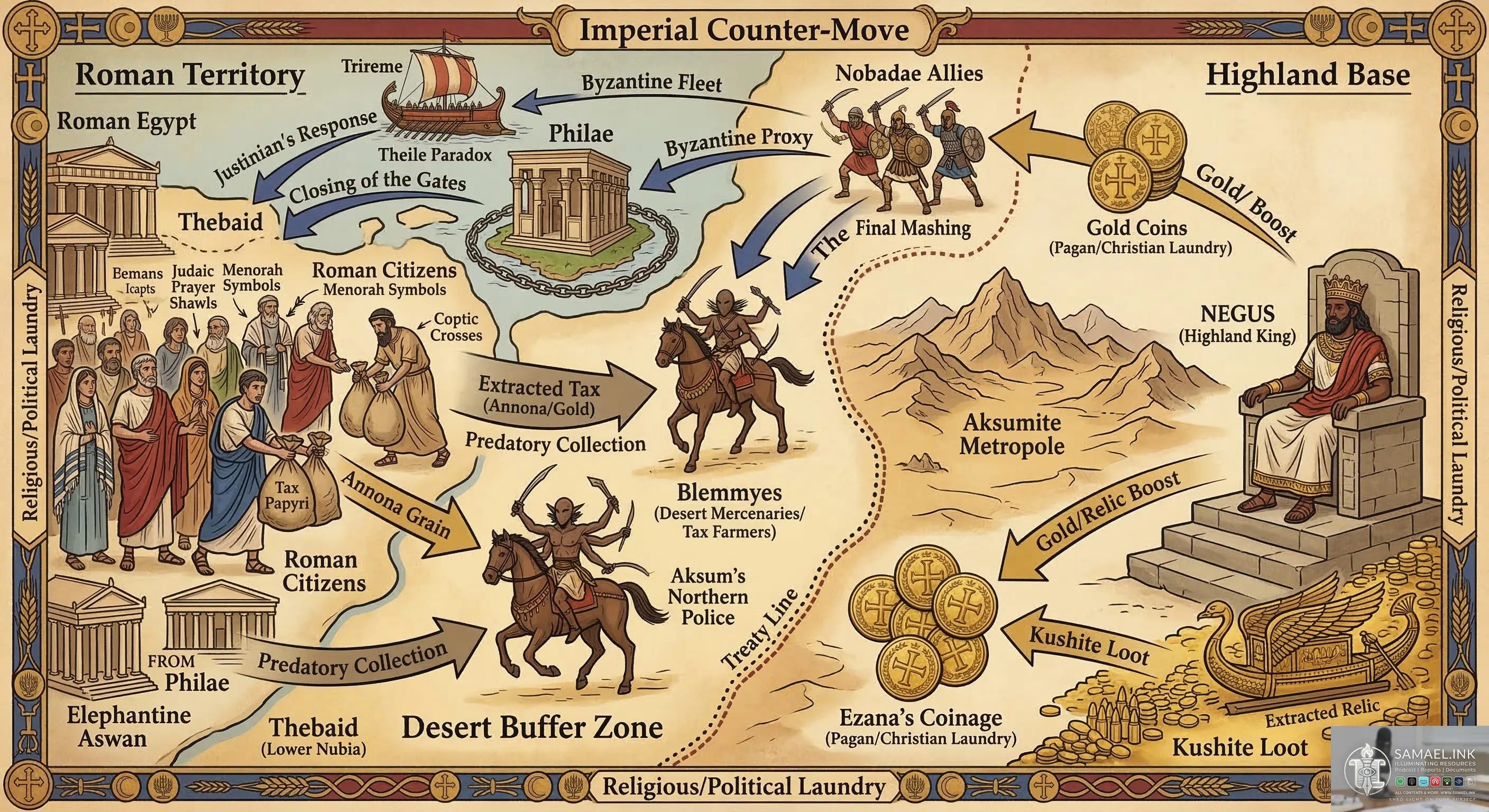
The Quest for Ecclesiastical Legitimacy (The Al-Maṭrān Requirement)
The most critical objective for the Highland monarchs was the procurement of the Abuna (the Al-Maṭrān). Under the Trap of 451 (the Council of Chalcedon), the Ethiopian Church remained legally and spiritually tethered to the See of St. Mark in Alexandria.
The Objective: Without a Bishop consecrated by the Alexandrian Patriarch, no new Highland King could be legally anointed, and no new priests could be ordained. The Church—and by extension, the State—would “dry out.”
The Communication: Letters from the Zagwe and Solomonic kings to the Sultan were often desperate petitions disguised as fraternal greetings. They were “compelled” to pay massive tributes (often in gold or “prestigious spoils” from the south) to the Sultan to “laundry” the release of a new Bishop from Cairo.
The Reciprocal Protection of Co-Religionists
This objective formed the “Double Hostage” architecture. Both sovereigns used their respective religious minorities as human collateral to ensure the “hardware” of their empires remained intact.
The Christian Hostages: The Negus communicated his role as the “Protector of the Holy Places” in Jerusalem and the Coptic population in Egypt. If the Sultan persecuted the Copts, the Negus threatened to “mash” the Islamic settlements on his frontier or, more famously, to divert the Nile.
The Muslim Hostages: Conversely, the Sultan acted as the protector of the Muslims in the Sultanate of Ifat and the trading communities in the Ethiopian interior.
The Result: Communication served as a “thermal regulator.” Diplomacy was used to prevent local skirmishes from escalating into a total regional “mashing” that would destroy the delicate balance of the Red Sea.
Trade, Passage, and the Logistics of Prestige
The third objective was the maintenance of the “Transit Corridor.” This was essential for the movement of luxury goods and the safe passage of pilgrims.
Trade Routes: The Highland kings needed to ensure that their “Gold Boost” (extracted from the southern lordships) could be traded in the markets of Cairo and Damascus without being seized by the Sultan’s governors.
The Pilgrim Path: Communication focused on the “Safe Conduct” of Ethiopian monks traveling to Jerusalem. For the Solomonic kings, the presence of an Ethiopian community in Jerusalem was a vital “Sign” of their imperial prestige, proving they were not merely local chieftains but global Christian actors.
The “Laundered” Tribute: Many trade missions were framed as “diplomatic gifts,” allowing both sides to exchange resources (highland horses and gold for Egyptian textiles and military hardware) without admitting to a formal commercial dependency.
Summary of the “Double Hostage” Communication
Conclusion: The Cage of Geography
The Nile Paradox ensured that neither power could ever truly “mash” the other. The communication between them was a continuous effort to manage this “Double Hostage” situation. By the time the Highland center moved to the inland metropole of Kubrā, these three objectives had become the permanent framework of Northeast African diplomacy, ensuring that while the two worlds were separate, they were never truly “dried” of each other’s influence.