
The Habshi Presence in India: A 300‑Year Forensic History
The presence of Habshis (Ethiopian/Abyssinian people, often called Sidis in western India) across South Asia is a documented, multi‑century phenomenon in administrative records, coins, architectural remains, and colonial archives. Far from being isolated mercenaries, Habshi leaders occupied elite military, administrative, and sovereign roles—from the Habshi interlude in the Bengal Sultanate (late 15th century), through the Deccan regencies centered on figures like Malik Ambar, to the long‑lived Sidi naval polity of Janjira. Reading these sources together shows a continuous strand of African political power that was later minimized or reframed within colonial narratives.
Evidence from contemporary chronicles and court records
- Burhan‑i‑Maʿāṯir, Tuzuk‑i‑Jahangiri, and Tarikh‑i‑Ferishta provide contemporaneous testimony that Africans served not only as soldiers but as influential commanders and rulers in Indian courts. Jahangir’s memoirs explicitly single out Malik Ambar as a persistent and formidable opponent of Mughal expansion, offering direct imperial recognition of his power. These court texts are the primary administrative “system logs” recording Habshi presence and influence.
Malik Ambar: military genius and de facto ruler
- Malik Ambar (c.1548–1626), born in the Hararghe region of Ethiopia and brought to India as a slave, rose to become regent of the Ahmadnagar Sultanate and a master strategist of guerrilla warfare, state finance, and polity construction in the Deccan. He engineered administrative and fiscal reforms, raised effective military forces, and placed client princes on thrones while exercising real executive control—functioning as a kingmaker and sovereign authority in practice if not in title. Modern scholarship reconstructs his trajectory from primary Persian sources and regional records to demonstrate sustained political control and institutional innovation under his leadership.
The Habshi Dynasty of Bengal (c.1487–1493): coins and architectural traces
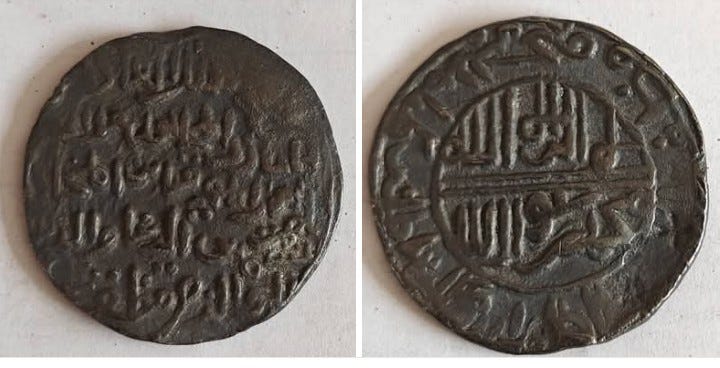
- Numismatic and archaeological evidence confirms that Habshi rulers briefly but genuinely ruled Bengal. Coins minted in the names of Habshi sultans (for example, rulers associated with names like Saifuddin Firuz Shah and Shamsuddin Muzaffar Shah) are hard material proof of sovereign claim and fiscal authority. Architectural complexes and urban remains in Gaur and the Adina mosque precincts reflect continuity of courtly patronage in that era. The Bengal episode shows that Africans in India could and did seize and exercise root political power, not merely serve as retainers.
The Sidi polity of Janjira: sea‑sovereignty across centuries (1618–1948)
- The Sidi state centered on the island fort of Janjira on the western coast maintained near‑continuous autonomy for centuries, surviving Mughal, Maratha, and British pressures. Local genealogies, Sidi administrative records, and British East India Company correspondence and naval logs document treaties, coastal diplomacy, and repeated Maratha attempts to capture Janjira—none of which wholly succeeded. Janjira’s durability demonstrates a distinct African maritime sovereignty: a coastal polity exercising naval command, treaty relations, and long‑term dynastic continuity until Indian independence and integration.
The “elite slave” (Mamluk/Ghulam) institution: social technology enabling sovereignty
- The Indo‑Islamic use of military slaves (ghulams, mamluks) functioned as a deliberate state design: imported or ethnically distinct elites trained, educated, and bound to rulers to offset local factionalism. In practice, this created a class with high military skill, literacy in Persian/administrative languages, and loyalty to the state apparatus—often promoted to the highest offices. The “slave” label obscures the institutional reality that these figures served as governors, regents, and sovereign agents. Comparative analysis with Mamluk systems elsewhere clarifies the mechanism by which Habshis translated outsider status into centralized power within Indian polities.
British archival choices and the making of colonial narratives
- British colonial historiography favored schemas that legitimized imperial rule—one being “martial races” and the other a managerial narrative of bringing order to supposedly fractious or primitive polities. These frameworks minimized or reframed non‑European systems of statecraft that conflicted with imperial ideology. The sustained agency of African elites—who had exercised naval and territorial sovereignty—was often relegated to categories like “mercenaries” or “exotic contingents” in colonial accounts, a rhetorical move that simplified complex precolonial power structures and buttressed imperial claims of unique civilizational competence. Contemporary archival recoveries and numismatic and local records allow a corrective, forensic reconstruction.
Synthesizing the timeline: distributed sovereignty across three centuries
- Late 15th century: Habshi rulers in Bengal establish the precedent of African sovereign rule in a major, wealthy province (coins and local chronicles).
- 16th–17th centuries: African commanders and regents, epitomized by Malik Ambar in the Deccan, operate as the effective executive—organizing finances, towns, and armies and resisting Mughal expansion.
- 17th century–mid 20th century: Sidi Janjira maintains maritime sovereignty, exercising naval power and diplomatic parity with regional states and Europeans, and continues as a recognized princely line into the British Raj.
Taken together, these episodes represent overlapping and successive nodes of political power held by Africans in South Asia across roughly three centuries.
Forensic implications for historiography and political memory
- The archival and material record demonstrates the political normalcy of African‑origin elites in South Asian state systems. The erasure or downgrading of this record in popular and school histories reflects historiographical choices aligned with colonial political needs—choices that need empirical correction rather than conspiracy theorizing. A forensic perspective treats coins, administrative chronicles, local court papers, and British naval logs as complementary data streams that, when aggregated, reconstruct a systemic African presence that was structural, not incidental.
Comparative frameworks and modern resonances
- Conceptually, the Habshi phenomenon resembles other historical systems in which “outsider” military elites convert functional authority into sovereign command (e.g., Mamluks in Egypt). The Deccan/Sidi model also reframes assumptions about the sources of state capacity: skilled, literate, and institutionally embedded commanders—regardless of origin—could provide durable governance. This reframing complicates simplistic narratives that attribute precolonial state collapse or administrative incapacity to indigenous failures rather than the strategic reordering of power under colonial rule.
Conclusion
The Habshi presence in India—documented through Persian chronicles, numismatic evidence, architectural remains, local Sidi records, and colonial naval logs—constitutes a coherent, multi‑century record of African political agency in South Asia. From the Habshi rulers of Bengal to Malik Ambar’s regency in the Deccan and the maritime sovereignty of Janjira, African elites were not peripheral auxiliaries but central institutional actors. Recognizing this continuity corrects archival silences produced by imperial historiography and recovers a significant thread of Indian Ocean political history.
Suggested primary and secondary sources
- Burhan‑i‑Maʿāṯir (Persian chronicle) — contemporaneous Deccan court records.
- Tuzuk‑i‑Jahangiri (Memoirs of Jahangir) — imperial diaries referring to Malik Ambar.
- Tarikh‑i‑Ferishta — early 17th‑century narrative history documenting Abyssinian officers.
- Richard M. Eaton, A Social History of the Deccan, 1300–1761: Eight Indian Lives — chapter on Malik Ambar and Deccan polity.
- Shanti Sadiq Ali, The African Dispersal in the Deccan — structural study of the Habshi/Sidi systems.
- Sylviane A. Diouf, The African Diaspora in the Indian Ocean World — broader Indian Ocean context.
- Numismatic catalogs and collections documenting Bengal Sultanate coinage attributed to Habshi rulers.
- British East India Company naval logs and treaties concerning Janjira and Sidi chiefs (18th–19th century).