
TL;DR:
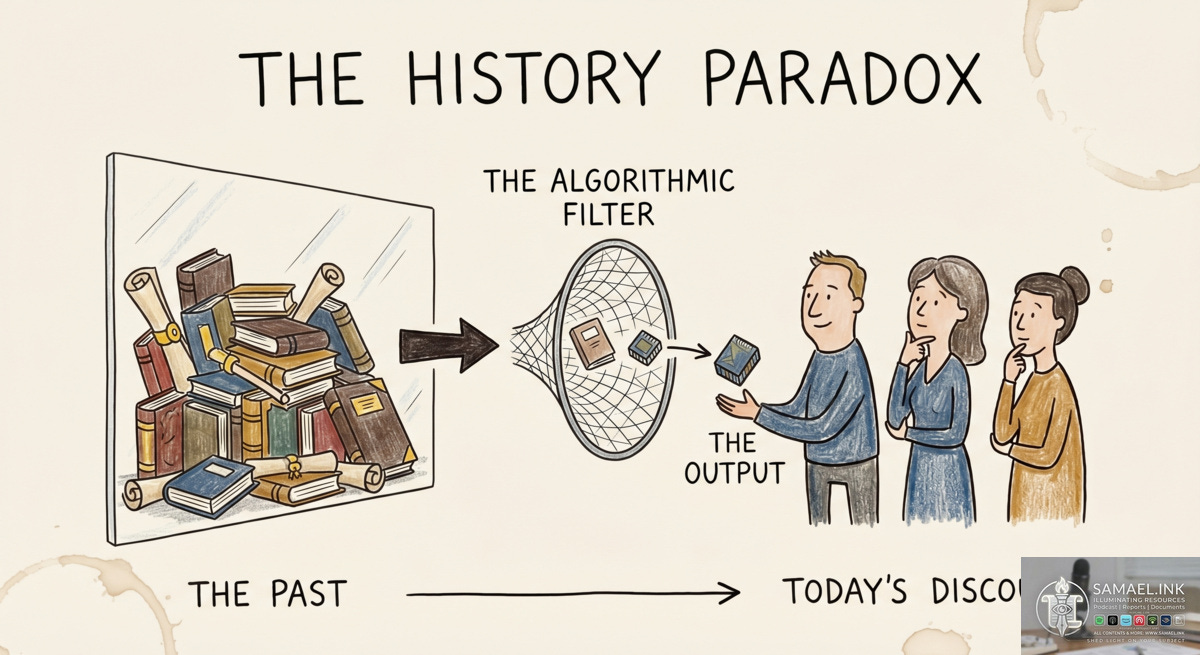
There’s a quiet contradiction lurking beneath the surface of today’s digital publishing landscape. As of April 2026, Substack’s trending history section appears vibrant with newsletters, essays, and authors claiming to explore the past. Yet beneath this apparent prosperity lies a troubling question: How much of what we’re consuming as “history” actually engages with historical inquiry?
This article explores the gap between trending historical content and genuine historical practice, examining why popularity and historical rigor often pull in opposite directions. By analyzing the specific cohort of authors currently rising in the space—from those operating in the realm of myth and ideology to those grounded in disciplinary rigor—we can map the spectrum of approaches to the past and identify where the line between history and something else is drawn.
The Illusion of Abundance
The current landscape is crowded with voices claiming to offer historical insight. However, a closer look at the specific authors dominating the conversation reveals a stark divide in methodology and intent.
What the Current Landscape Actually Shows
The available data on rising voices reveals several distinct categories of content, each with a different relationship to the past:
Mythology, Speculation, and Ideology: At one end of the spectrum are accounts like Mythology: Gods and Monsters and Dr. Heather Lynn which focus on ancient narratives that, while culturally significant, operate outside historical methodology by treating myth as literal record. Similarly, figures like Niall Ferguson and Michael Oren, despite holding academic credentials, often produce work that prioritizes political advocacy or counterfactual speculation over empirical historical inquiry. Their output frequently serves as a vehicle for contemporary political positions rather than dispassionate historical analysis.
Identity-Focused Narratives and Advocacy: Authors such as Jemar Tisby, Jermaine Fowler, and accounts like Brown History and Books Behind Borders emphasize social justice and racial history. While these topics are historically significant, their approach often prioritizes moral advocacy and contemporary political messaging over the complex, sometimes uncomfortable, nuances of historical evidence. The focus here is often on identity formation and moral lessons rather than the rigorous interrogation of sources.
Popular Narrative, Entertainment, and Art: Writers like Nick Bryant, James Lucas, and accounts such as artlust blend art, culture, and history in ways that prioritize aesthetic or emotional resonance over factual accuracy. These voices often treat the past as a backdrop for storytelling or cultural commentary, sacrificing historical constraint for dramatic effect.
The Gray Zone: Authors like Lucy Worsley, Jillian Hess, and Richard Kreitner occupy an intermediate space. Worsley is a respected historian and curator, but her Substack presence often leans toward popular storytelling and television-style narrative. Kreitner is a journalist with a strong grasp of historical context, but his work often serves as political commentary using history as a backdrop rather than a deep dive into historical inquiry itself.
Disciplinary Practitioners: A smaller, distinct cohort—including Martin Cherrett, Issac Samuel, Katja Hoyer, Bruce Ivar Gudmundsson, Kevin M. Levin, Peter Turchin, Colin Gorrie, Hussein Aboubakr Mansour, and Shawn Grows—consistently demonstrates a commitment to evidence, methodology, and scholarly rigor. These voices represent the core of genuine historical practice in the digital sphere.
The distinction matters profoundly.
The Core Problem: What Counts as “History”?
Historical Practice vs. Historical Content
Genuine historical work involves:
Source criticism: Evaluating primary documents for bias, reliability, and context.
Methodological transparency: Showing how conclusions were reached.
Engagement with historiography: Acknowledging existing scholarship and debate.
Nuanced argumentation: Avoiding presentism and recognizing historical complexity.
Peer review or scholarly accountability: Submitting work to expert scrutiny.
What dominates the feeds of many trending authors:
Narrative appeal: Stories that confirm existing beliefs or entertain.
Present-day relevance: Connecting past events to current politics without historical distance.
Simplified causality: Reducing complex events to single causes or villains.
Celebratory framing: “Hidden heroes” and “forgotten contributions” without critical analysis.
Algorithm optimization: Content designed to generate engagement, not understanding.
The Conflation of Genres
One of the most significant issues is the conflation of different genres. Accounts like Mythology: Gods and Monsters, Dr. Heather Lynn or those focused on artlust often appear alongside serious historical analysis, yet they operate under entirely different rules. Fiction and mythology prioritize emotional truth over factual accuracy, and their creators are not bound by source requirements. When these voices dominate trending lists, readers seeking to understand the past encounter storytellers skilled at imagination, not historians trained in evidence evaluation.
Why Popularity Undermines Historical Integrity
The Algorithmic Incentive Structure
Substack’s trending mechanisms reward:
Consistent posting schedules (often incompatible with deep research).
Engagement metrics (comments, shares, subscriptions).
Emotional resonance (outrage, inspiration, nostalgia).
Accessibility (simplification over nuance).
These incentives systematically disadvantage rigorous historical work, which tends to be irregular, complex, ambiguous, and specialized. The voices that thrive under these conditions are often those like Nick Bryant or James Lucas, who prioritize narrative flow and emotional connection over the messy reality of historical evidence.
The Expertise Gap
Many trending “history” authors lack formal historical training or choose to bypass it. This isn’t inherently problematic—public history has value—but it becomes problematic when:
Claims are presented as fact without methodological transparency.
Scholarly debates are ignored in favor of clean narratives.
Primary sources are misinterpreted or selectively quoted.
Context is sacrificed for dramatic effect.
The current landscape shows that academic voices like Katja Hoyer and Kevin M. Levin remain exceptions rather than the rule among the most visible trending publications.
The “Relevance” Trap
A significant portion of trending historical content connects past events to contemporary politics. While this can be valuable, it often crosses into Presentism Without Reflection.
Authors like Jemar Tisby or Michael Oren often use history primarily as:
Political ammunition (finding precedents for current positions).
Moral lessons (extracting clear ethical guidance from complex situations).
Identity affirmation (celebrating groups without examining internal diversity).
Cultural commentary (treating the past as a mirror for present concerns).
This approach treats history instrumentally rather than understanding it on its own terms. The result is content that feels “historical” but functions as contemporary political discourse wearing period costume.
What Genuine Historical Engagement Looks Like
The Counter-Examples
Amidst the noise, a specific group of authors maintains historical integrity. These voices stand out for their adherence to disciplinary standards:
Martin Cherrett (@ww2today): A dedicated researcher of World War II, known for meticulous attention to detail and reliance on primary sources, avoiding the sensationalism common in popular WWII coverage.
Katja Hoyer: A historian specializing in German history, characterized by deep archival research and a nuanced understanding of complex historical forces, consistently engaging with historiographical debates.
Bruce Ivar Gudmundsson: Brings a unique perspective to military history, focusing on the logistical and tactical realities of warfare grounded in extensive research.
Kevin M. Levin: Specializes in the American Civil War and the memory of slavery, known for rigorous engagement with primary sources and challenging popular myths.
Peter Turchin: Applies quantitative methods and cliodynamics to historical analysis, rooted in data and methodological rigor, even when his theories are controversial.
Colin Gorrie: Focuses on the history of technology and science, exploring the intersection of innovation and society with careful research.
Hussein Aboubakr Mansour: Engages with critical theory and historical materialism, offering a rigorous analysis of historical processes through a specific theoretical lens.
Shawn Grows: Writes on history with a focus on marginalized communities and social movements, grounded in archival research and a commitment to uncovering hidden histories.
These authors represent a minority of trending content but demonstrate what’s possible when historical practice meets public engagement.
Characteristics of Rigorous Historical Content
Transparent sourcing: Clear citations and acknowledgment of evidence limitations.
Acknowledged uncertainty: Willingness to say “we don’t know” or “this is debated.”
Contextual depth: Explaining why events happened within their historical moment.
Multiple perspectives: Presenting competing interpretations fairly.
Methodological awareness: Showing how historical knowledge is constructed.
The Reader’s Dilemma
Why This Matters
Consumers of historical content face a genuine challenge: How do you distinguish between content that teaches history versus content that merely uses history?
The consequences extend beyond individual understanding:
Public discourse suffers when historical analogies are shallow.
Policy decisions lack grounding when historical precedents are misunderstood.
Cultural memory becomes distorted when popular narratives replace evidence.
Democratic deliberation weakens when citizens lack historical literacy.
Practical Guidance for Readers
Check credentials: Does the author have historical training or demonstrate methodological rigor?
Look for sources: Are claims backed by primary documents or scholarly work?
Notice uncertainty: Does the author acknowledge gaps, debates, and limitations?
Evaluate framing: Is the past treated as a foreign country or a political tool?
Seek variety: Read multiple perspectives on the same events.
Conclusion: The Path Forward
The claim that trending authors have “mostly nothing to do with history” requires qualification. They have something to do with history—but not necessarily historical practice. They engage with the past as raw material for storytelling, political argument, identity formation, and entertainment.
This isn’t inherently wrong. Public history serves important functions. But conflating these activities with historical inquiry creates confusion about what history actually is and what it can accomplish.
The Real Question
Rather than asking whether trending authors “do history,” perhaps we should ask: What do we want from historical content?
Entertainment and inspiration?
Political education and mobilization?
Scholarly understanding and methodological rigor?
Cultural connection and identity affirmation?
Each purpose serves different audiences and requires different standards. The problem emerges when content marketed as “history” promises scholarly understanding but delivers something else entirely.
A Call for Transparency
The solution isn’t to eliminate popular history content. It’s to demand honesty about what’s being offered:
Mythology and fiction should be labeled as such.
Political commentary using history should acknowledge its instrumental nature.
Popular narratives should distinguish between evidence and interpretation.
Trending platforms should categorize content more precisely.
Until then, readers navigate a landscape where “history” means whatever generates the most subscriptions—and that’s rarely the discipline historians recognize.
Note: This analysis draws on available Substack directory data and trending lists as of April 2026. The historical publishing landscape evolves rapidly, and specific rankings may shift. For current information, consult Substack’s official leaderboards and individual publication archives.
What do you think? Should platforms distinguish more clearly between historical fiction, popular history, and scholarly work? Or does this categorization matter less than the quality of engagement with the past? I’d welcome your perspective on where the line should be drawn.