
Liquid Gold in Peril: Chinese-Run Fuel Reserves as Focal Points in Ethiopia’s 2026 Energy Crisis
TL;DR — Ethiopia’s 2026 energy crisis (≈180,000 t shortfall) and disrupted supply routes have created acute fuel scarcity. Fuel stocks inside Chinese-run manufacturing and construction sites—dubbed “liquid gold”—are high-value targets for rebels, opportunistic locals, and sabotage campaigns because they hold un-rationed supplies and symbolize the government’s BRICS+ pivot. As security forces are stretched, these sites face rising theft, attacks, and strategic disruption that could deepen economic collapse and political instability.
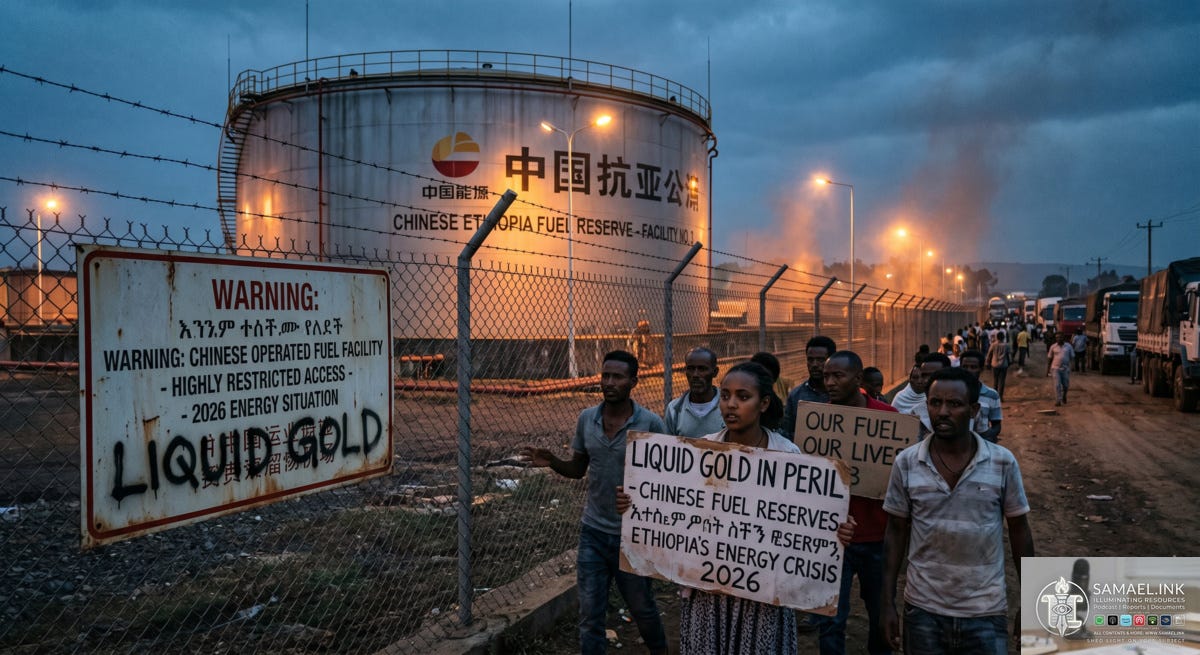
Ethiopia’s 2026 fuel squeeze: context and mechanics
Shortfall and supply shock: An estimated shortfall of about 180,000 metric tons of crude and refined products, with deliveries down to roughly 50% of normal after disruption of major routes such as the Strait of Hormuz.
Rationing and prioritization: Emergency measures limit private-use allocations (often 10–15 L/week), reserve fuel for public transport, emergency services, and construction, and allow industrial sites to hold sizeable on-site stocks.
Economic effects: Retail price inflation (~+26%), expanded black-market activity, higher transport costs, and rising public resentment.
Why fuels in Chinese plants are especially vulnerable
Concentrated reserves: Manufacturing plants and construction depots commonly keep large on-site tanks to avoid supply interruptions; those quantities are far larger than household allocations and attractive to actors seeking rapid mobility or resale goods.
Visibility and signaling: Chinese-backed infrastructure is visible and perceived by many as tied to the government’s external policy choices (BRICS+ pivot), increasing political salience.
Logistical role in sanctioned imports: Chinese trading networks and banks have been used to facilitate imports in ways that obscure origin and payment currency, making Chinese-linked depots part of grey-market supply chains.
Security gaps: Government security resources are focused on public stations, supply routes, and urban order; remote industrial sites are harder to defend, especially when forces are stretched.
Actors, motives, and tactics
Rebel groups: Require fuel for vehicles and generators and may aim to disrupt economic lifelines; tactics include raids, sabotage of storage and pumps, and seizure for immediate use or resale.
Opportunistic local populations: Looting driven by survival needs; smaller-scale thefts and pressures that can escalate into sustained occupation of depots.
Organized criminal networks: Theft to supply black markets and cross-border trade—operations may include bribery, forged documentation, or insider collusion.
State and local security forces: Deployment patterns focus on maintaining order at public sites and along major routes; remote industrial assets can remain exposed.
Immediate and medium-term dynamics
Escalation of unrest: Visible prioritization of industrial fuel risks provoking protests that may target high-value depots.
Supply-chain disruption: Interruptions at manufacturing and construction sites can accelerate layoffs, halt projects, and contract economic output.
Security intensification: Increasing incidents can lead to more overt protection measures around industrial assets, raising the likelihood of clashes and collateral damage.
Regional spillovers: Stolen fuel feeding cross-border black markets can finance armed actors and affect neighboring stability.
Ethical and political dimensions
Targeting foreign-run facilities carries risks of civilian harm and economic deterioration; narratives framing such attacks as resistance can also mask opportunistic looting.
Security measures that heavily militarize sites can affect local perceptions and social legitimacy.
Attacks on assets tied to foreign partners can influence diplomatic relations and complicate international responses.
Are Chinese plants being deliberately targeted because they’re Chinese?
Targets are chosen primarily for large, accessible fuel stocks; the nationality of the operator increases political symbolism and can amplify motivation to attack.
How likely is large-scale seizure of industrial fuel stores?
Risk rises where security is limited, public anger is high, and rationing visibly favors industry; prolonged shortages increase probability.
Who benefits from attacks on these depots?
Short-term beneficiaries include armed groups and black-market actors; longer-term outcomes typically harm the economy and civilians.
Can companies legally supply local civilians to reduce tensions?
Such arrangements depend on coordination with authorities and applicable legal frameworks.
Will militarizing plants stop attacks?
Militarization can deter opportunistic looting but may also raise the risk of violent confrontations.
What indicators should observers watch?
Frequency of raids/looting, protests near industrial sites, changes in security deployments, black-market fuel prices, and supply-route disruptions.
How does this affect Ethiopia’s broader geopolitics?
Attacks on assets linked to foreign partners can weaken the government’s external signaling, strain bilateral ties, and complicate international sanction-evasion dynamics.
Conclusion
The convergence of acute fuel scarcity, concentrated industrial stockpiles, and political symbolism makes fuel reserves inside Chinese-managed facilities notable focal points in Ethiopia’s 2026 crisis. The situation links resource scarcity, public sentiment, and geopolitical alignments, shaping both immediate security dynamics and broader political implications.