
The study of the religious landscape in 13th-century Damot must account for the arrival of Syrian religious currents and their subsequent integration into the local Ayana framework. This article argues that Mesalemism was a distinct imported tradition from Syria that predated or coincided with the rise of the Solomonic state’s ecclesiastical influence.
The Syrian Conduit and Mesalemism
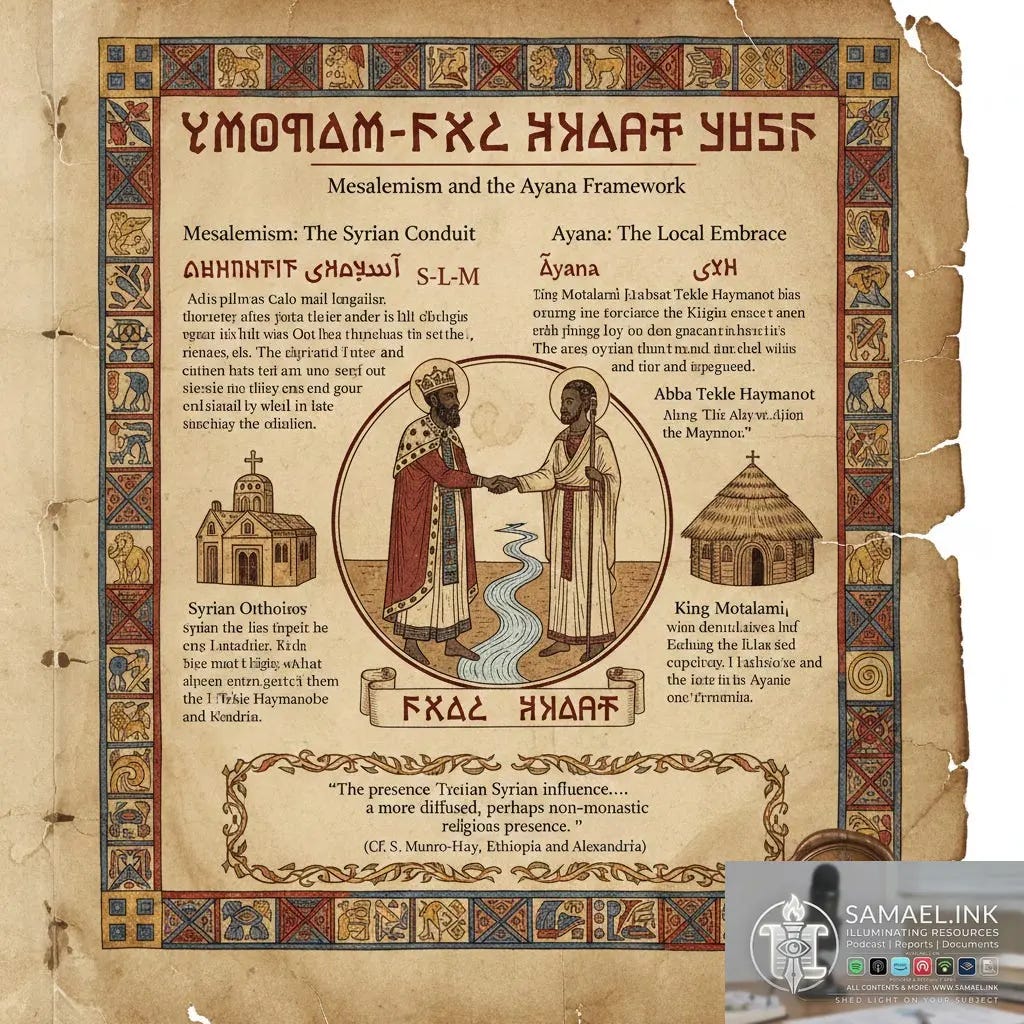
The article posits that Mesalemism (derived from the Semitic root S-L-M) was introduced via Syrian missionary or mercantile pathways. Its absorption into Ayana represents the localized processing of a foreign Semitic liturgy:
Mesalemism (Syriac: ܡܫܠܡܢܘܬܐ, romanized: mšalmānūṯā, lit. ‘tradition’ or ‘delivery’): In this context, the term refers to a specific set of imported Syrian ascetic practices or doctrines that were “delivered” to the Damotian plateau.
Ayana (Cushitic: Ayyana): The recipient framework. The “acceptance” of the faith by King Motolomi (Damot: Motalami) facilitated the merging of this Syrian mšalmānūṯā into the existing spiritual hierarchy of the Ayana.
The Motalami-Tekle Haymanot Synthesis
The encounter between King Motolomi and Abba Tekle Haymanot (Ge’ez: ተክለ ሃይማኖት, romanized: Takla Hāymānōt) is re-evaluated here as a transition from a Syrian-influenced “Mesalemism” to the standardized Alexandrian-Ethiopic monasticism. The conversion of the King acted as a legal bridge, translating Syrian concepts into the vernacular of the regional elite.
“The presence of Syrian influences in the Horn of Africa is well-attested through the ‘Nine Saints’ tradition, but the earlier absorption of Mesalemism suggests a more diffused, perhaps non-monastic Syrian religious presence that Motolomi eventually brought into the fold of the established Church.” (Cf. S. Munro-Hay, Ethiopia and Alexandria: The Metropolitan Episcopacy of Ethiopia).
Key Terminology and Native Scripts
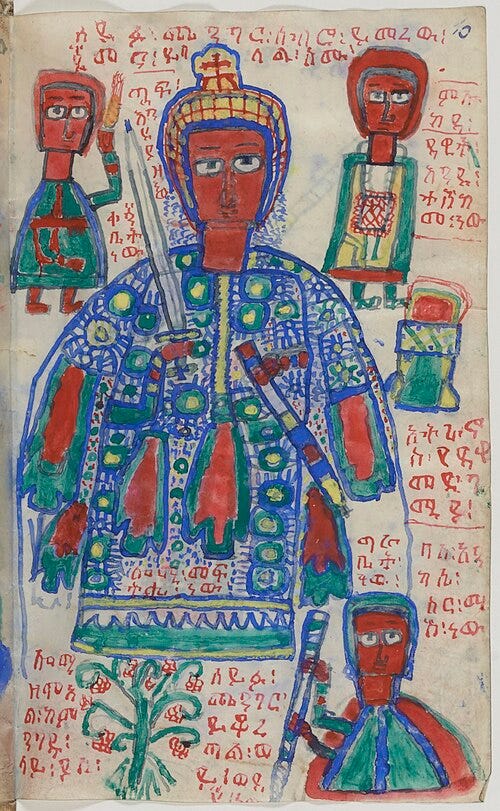
Motalami (Wolayta/Damot: Motalami): The sovereign of Damot whose conversion signaled the formal shift in the region’s spiritual allegiance.
Mesalemism (Syriac root: S-L-M (ܫ-ܠ-ܡ), Arabic: S-L-M (س-ل-م), lit. ‘to hand over/submit’): Used here to denote the “handed-over” Syrian tradition.
Ayana (Semitic/Cushitic cognates): Often used to denote a spirit, but in the context of this absorption, it refers to the “grace” or “essence” that validates the new imported faith within the local consciousness.