
TL;DR
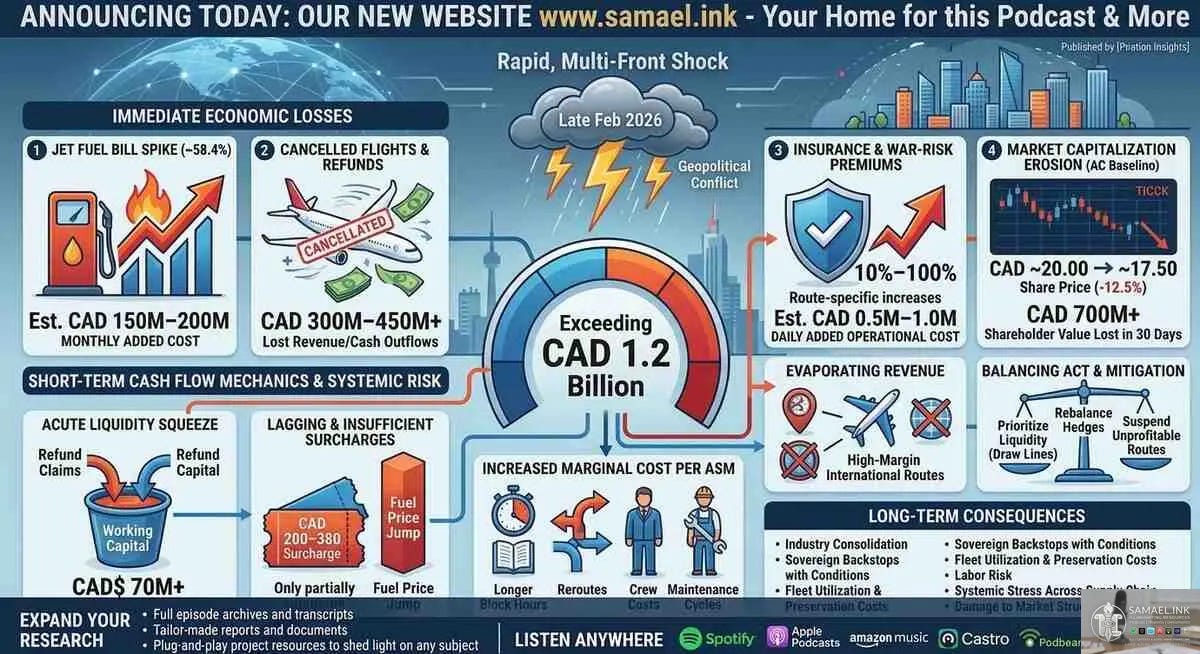
A rapid, multi-front shock since late February 2026 has imposed immediate, large-scale losses on Canadian aviation—fuel costs, cancellations/refunds, insurance premiums, and market-value declines together top roughly CAD 1.2 billion in short‑term damage, with ongoing daily operational losses that risk turning this into a prolonged crisis. Airlines are covering only part of the pain with surcharges and credits; liquidity strains, insurance hikes, and rerouting mean the sector is burning cash fast while revenue from high‑margin international routes evaporates.
Why it matters
This spike isn’t isolated: jet fuel surges cascade through every line of an airline’s P&L because fuel is one of the largest single cost items. When fuel jumps by roughly 58% over weeks, the effect compounds with reroutes, longer block times, and increased technical and crew costs. Second, cancellations of premium long‑haul routes create immediate cash outflows via refunds and destroy future yield from lost premium customers; unlike simple schedule reductions, forced shutdowns of key corridors remove the highest-margin sales. Third, risk repricing—insurance “war risk” premiums, route closures, and investor flight—tightens liquidity and raises daily burn rates, converting a fast shock into structural stress for carriers that rely on working capital from advance ticket sales.
Annotated summary of the damages (late March 2026 figures)
Fuel bill — 58% spike: Global jet fuel rose ~58.4% between Feb 27 and mid‑March. Using Air Canada’s 2024 fuel spend (~CAD 5.1B) as a baseline, a sustained 58% increase implies roughly an additional CAD 250M per month; conservative short‑term estimate used below: CAD 150M–200M monthly.
- Cancelled flights & refunds: Forced cancellations on high‑margin international routes (e.g., Dubai, Tel Aviv) create disproportionate revenue loss; historical disruption benchmarks (~CAD 430M) are exceeded. Current tracking: CAD 300M–450M+ in lost revenue and refunds.
- Insurance / war‑risk premiums: Route‑specific war‑risk cover spikes of 10%–100%; combined with rerouting and lost bookings, analysts estimate CAD 0.5M–1.0M daily in added operational cost for major carriers.
- Market capitalization erosion: Air Canada moved from near CAD 20.00 pre‑conflict to ~CAD 17.50 on March 30 — roughly a 12.5% drop, equating to CAD 700M+ in shareholder value lost in 30 days.
- Total immediate hit (March 2026): Exceeding CAD 1.2 billion when combining the line items above.
Short-term cash flow mechanics and systemic risk
Refunds are draining cash as passengers demand cash refunds under APPR rules and safety cancellations, creating an acute liquidity squeeze. Cash outflows for refunds occur within days while revenue recovery from rebookings and voucher uptake is delayed, leaving airlines with immediate working capital shortfalls. Travel agents, global distribution systems and card acquirers can hold funds or delay settlement, worsening timing mismatches and magnifying the cash gap.
Fuel surcharges lag and are insufficient. Surcharges of CAD 200 to 380 per ticket blunt but do not fully offset a sudden 58 percent fuel rise, especially on long haul premium cabins where load factors and yields already vary. Spot fuel spikes hit cashflow immediately even when some costs are hedged, producing rapid margin erosion on high yield sectors.
Insurance and rerouting are increasing marginal cost per available seat mile while revenue falls faster than fixed costs can be cut, compressing margins rapidly. Longer sectors raise block hours, crew costs, airport charges and maintenance cycles, increasing unit costs. Hub connectivity losses cascade as cancelled long haul feed reduces short haul connectivity and ancillary sales.
Equity losses are eroding balance sheet flexibility and raising cost of capital. A significant market capitalization drop forces higher borrowing spreads and can breach lending covenants, triggering margin calls, emergency asset sales and distressed recapitalizations. Dilutive equity raises are constrained in depressed markets, and sovereign backstops where available come with political conditions that can alter strategic choices.
Fleet utilization is churned as aircraft are parked or redeployed, with rising parking and preservation costs and deferred maintenance creating medium term reliability risk. Lessors and financiers hoard liquidity, demand higher reserves or seek early returns of collateral, reducing fleet flexibility and increasing operational fragility. Employee and labor risk grows as cash strain leads to layoffs, urgent renegotiations or strikes, further disrupting operations and adding severance liabilities.
Cargo repricing is volatile and unreliable as a steady cash source because rerouting and airspace closures make yields unpredictable. Pension deficits widen as asset values fall and ongoing contributions strain sponsors, risking calls for emergency funding. Supplier stress cascades as unpaid lessors, maintenance repair and overhaul providers and airports face liquidity shortfalls, creating systemic stress across the aviation supply chain.
Market structure is being damaged. Network contraction on unprofitable long haul routes is reducing connectivity and shrinking markets for feeder carriers. Increased ticket prices and surcharges are depressing demand and provoking regulatory and political backlash. Smaller carriers with thin capital are facing insolvency, while asset fire sales are depressing valuations and concentrating market power. Creditors and pensioners experience worsening recoveries as cash burn persists beyond the immediate shock window.
Overall the industry is facing acute liquidity depletion, rapidly compressed margins, operational fragility, cascading counterparty stress and structural market damage that could leave lasting reductions in capacity, connectivity and competition.
Quick scenario model (illustrative)
Base incremental fuel monthly increase is CAD 150M–200M. Sudden sustained fuel price stress forces immediate cash outflows for unhedged exposure and raises operating cycle costs through longer sectors and higher fuel burn on reroutes.
Refunds and lost revenue are CAD 300M–450M as a one‑time cash hit. Forced cancellations on high‑yield long‑haul flows and mass refund claims create immediate liquidity drain; ancillary sales, baggage and premium services tied to those itineraries are also lost, amplifying the cash impact beyond ticket refunds alone.
Market capitalization erosion exceeds CAD 700M. Although non‑cash, the equity value decline tightens liquidity by increasing borrowing costs, shrinking covenant headroom and constraining access to capital markets; this elevates the likelihood of covenant breaches, margin calls and distressed refinancing needs that translate into real cash consequences.
Combined short‑term cash impact: more than CAD 450M immediate cash drain when adding refunds and other operational cash hits, plus ongoing CAD 150M–200M monthly fuel overrun. The total economic hit in the short window therefore exceeds CAD 1.2B, with layered effects from insurance premium spikes, rerouting costs and reduced ancillary revenue that can push realized losses higher.
Secondary losses and amplifiers worsen the picture. Longer block hours and reroutes increase crew, maintenance and airport charges per flight hour, raising marginal cost per ASM. Deferred maintenance and parked aircraft generate preservation costs and reduce available capacity, lowering revenue potential on recovery. Lessors and financiers may demand higher reserves or accelerate repossessions, creating near‑term cash calls. Pension funding stress and supplier payment delays can trigger legal and regulatory interventions that further drain cash. Together these channels convert headline nominal losses into deeper, longer‑lasting liquidity shortfalls and solvency pressure across the carrier and its counterparties.
Which cost line rose by ~58% and why does it matter?
— Jet fuel spiked ~58.4%; fuel is one of the airline industry’s largest expenses, so such a surge sharply raises monthly operating costs.
How much extra monthly fuel expense does a 58% rise imply for Air Canada?
— Using a 2024 baseline, roughly an added CAD 150M–200M per month in the short term.
Why are refunds particularly damaging now?
— Safety cancellations under APPR lead many passengers to choose cash refunds over credits, draining airline liquidity immediately.
What is the range of daily operational losses from insurance, rerouting, and bookings?
— Industry analysts estimate about CAD 0.5M–1.0M per day for major international carriers.
How much shareholder value did Air Canada lose in 30 days?
— Approximately CAD 700M+ following a ~12.5% share price decline from CAD 20 to CAD 17.50.
What is the estimated immediate total financial hit by late March 2026?
— Exceeding CAD 1.2 billion when combining fuel, refunds, and market‑cap losses.
Can fare surcharges fully offset the fuel shock?
— No; surcharges (CAD 200–380 per ticket) blunt the impact but don’t fully neutralize a sudden 58% fuel spike, especially on long‑haul routes.
What short‑term actions should carriers take first?
— Prioritize liquidity (draw lines, conserve cash), rebalance hedges, and suspend unprofitable long‑haul services.
What longer systemic risk does this create?
— Prolonged liquidity stress can trigger consolidation, insolvencies among weaker carriers, and higher financing costs for the industry.