
TL;DR:
Long before 20th‑century immigration waves from Asia, Europe, and the Middle East reshaped Canada’s cities, Black communities were already establishing roots—working, resisting, building institutions, and shaping the social and cultural life of the country. From Mathieu da Costa in the early 1600s to Black Loyalists, Jamaican Maroons, and Underground Railroad refugees, Black people helped form communities and contest exclusion long before Canada’s multicultural narrative became widely recognized.
This article was originally published on May 13, 2025.
Early Presence: Mathieu da Costa and the 17th Century
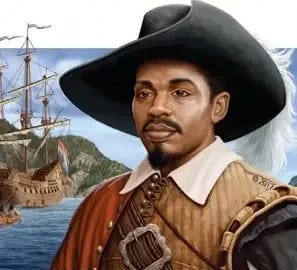
The story of Black presence in Canada begins earlier than many imagine. Mathieu da Costa, recorded in the early 1600s, stands as the earliest documented Black person in what would become Canadian territory. Employed as a free, multilingual interpreter by French and Dutch explorers, da Costa’s role complicates simplistic narratives of early colonial interactions. He navigated linguistic and cultural divides, facilitating trade, negotiation, and contact between Indigenous peoples and European newcomers. His presence underscores that people of African descent participated in shaping early colonial encounters—not merely as enslaved labor but as skilled intermediaries.
Enslavement, Labor, and Early Contributions
As European settlement expanded in the 17th and 18th centuries, the transatlantic slave trade reached into New France and later British colonies. Enslaved Africans lived and labored across Quebec, the Maritimes, and the emerging Atlantic outposts—working in households, on farms, and in artisanal trades. Though their numbers were smaller than in plantation economies to the south, their labor was integral to colonial households and economies. Enslaved and free Black people contributed knowledge, craft, and labor that helped sustain colonial communities; they also formed networks of resistance, escape, and communal life that prefigured later organized migrations.
Black Loyalists, Post-Revolution Resettlement, and Community Building
The American Revolution catalyzed a major moment in Black migration to Atlantic Canada. The British offered freedom to enslaved people willing to fight on their side, and thousands accepted the offer. After the war, the British evacuated loyalists, including over 3,000 Black Loyalists, to Nova Scotia and New Brunswick in 1783. These settlers founded communities—Birchtown among them—that were ambitious attempts at autonomy and land-based livelihoods. They cleared forested land, built homes and churches, and established schools and mutual aid practices. Yet promises of land and support were frequently broken or delayed; Black Loyalists often received poorer plots, faced administrative prejudice, and struggled to secure economic stability.
Jamaican Maroons and Continued Arrivals
In 1796, the British deported a group of Jamaican Maroons—enslaved people who had fought prolonged resistance against colonial rule—to Nova Scotia after suppressing a rebellion in Jamaica. Their arrival added a distinctive thread to Black presence in Atlantic Canada. The Maroons’ experience—harsh winters, bureaucratic neglect, and eventual relocation to Sierra Leone—reveals the precariousness of Britain’s commitments and the transnational dimensions of Black resistance and displacement in the era.
The Underground Railroad and 19th‑Century Freedom Seekers
The 19th century saw another major influx: the Underground Railroad. Canada’s relative legal status as a refuge after Britain abolished slavery made it a magnet for freedom seekers from the United States. Tens of thousands used clandestine routes, safe houses, and sympathetic networks to reach Canadian soil—estimates suggest over 30,000 freedom seekers arrived in the 1800s. They settled across Ontario, Nova Scotia, and other provinces, creating towns, churches, schools, and newspapers. Black settlements—Buxton, Dresden, and Queen’s Bush among them—became vibrant centers of Black civic life, entrepreneurship, and political organizing.
Economic and Cultural Contributions Across Sectors
Black Canadians worked in every sector available to them: fishing, lumber, farming, shipping, crafts, hospitality, and later industrial labor. They were tradespeople, domestic workers, seafarers, and entrepreneurs. Culturally, they shaped music, foodways, religious life, and vernacular traditions that intertwined with regional identities. Black churches and mutual aid societies played central roles in community resilience, education, and political mobilization, supporting literacy programs and advocating against discriminatory laws. These institutions provided the backbone for organizing, cultural preservation, and intergenerational memory.
Military Service and the Struggle for Recognition
Black Canadians also served in military conflicts, even when denied equal status. During the War of 1812 and later conflicts, Black volunteers fought for British or colonial forces. In World War I, Canadian military policy initially excluded Black men from many regiments; persistent advocacy led to the formation of the No. 2 Construction Battalion in 1916—the only all-Black battalion in Canadian military history. These soldiers performed grueling labor—road building, trench work, timber operations—under hazardous conditions and often without the recognition afforded white units. Their service highlights both patriotism and the racial barriers that persisted in national institutions.
Segregation, Dispossession, and Africville
Despite contributions, Black communities frequently faced systemic exclusion. Segregated “Coloured” schools were common in Nova Scotia into the mid-20th century; discriminatory hiring, housing bias, and social marginalization limited economic mobility. Africville, a Black community on Halifax’s edge, vividly symbolizes municipal neglect: for decades residents lacked running water, sewage, and paved roads while the city allowed polluting industries nearby. In the 1960s, citing “urban renewal,” authorities forcibly relocated Africville residents and demolished the neighborhood—offering little compensation or consultation. It wasn’t until 2010 that Halifax formally apologized and offered partial reparations and memorialization—an official reckoning after many years of activism.
Intersections with Indigenous Peoples and the Complexity of Early Diversity
The presence of Black people in Canada also intersected with Indigenous societies in complex ways. Black migrants, freed people, and interpreters often moved through territories governed by First Nations, Métis, and Inuit peoples—forming alliances, intermarrying, and participating in trade networks. Yet it is crucial to emphasize that Indigenous diversity predates and grounds all these histories; First Nations, Métis, and Inuit cultures existed in rich, varied societies for millennia before European contact. Any account of Black Canadian history must acknowledge these older, foundational layers and explore the ways Indigenous and Black communities interacted across time.
Migration Waves That Followed—and Why Black Arrival Was Earlier
Large-scale immigration from Asia and South Asia that often dominates conversations about Canadian multiculturalism occurred later. Chinese migration accelerated during the Gold Rush of the 1850s and railroad construction in the late 19th century; South Asian migration picked up in the early 20th century and expanded significantly after the 1960s immigration reforms. In contrast, Black communities had already been rooted in Canadian regions for generations by the time these later waves arrived—making Black Canadians among the first sustained non-Indigenous, non-white communities to shape the emerging social fabric.
Cultural Legacy, Recognition, and Contemporary Revival
Recognition of Black Canadian history has grown in recent decades. Black History Month, formally observed in Canada since 1995, fosters public education about these histories. Artists, writers, and scholars—Portia White, Lincoln Alexander, George Elliott Clarke, Michaëlle Jean, and many others—have elevated Black voices in national culture and politics. Contemporary activism, museums, community archives, and educational initiatives work to preserve and teach this history, from the sites of former settlements to oral histories and archival recovery projects. Cultural festivals, scholarly research, and restitution efforts (as with Africville) signal a gradual public reckoning and renewed appreciation for Black pioneers’ role.
Ongoing Challenges and the Work Ahead
Despite progress, systemic inequalities persist: disparities in health, education, criminal justice, and economic opportunity continue to affect Black Canadians. Anti-Black racism remains a lived reality for many communities. Effective redress requires more than symbolic acknowledgement: policy changes, targeted investments in education and economic development, reparative measures, and continued public education are essential. Preserving memory also demands resources—archives, museums, curricula—and political will to incorporate these histories into national narratives meaningfully.
Remembering Black Canadians as Foundational Actors
Black Canadians were not mere later additions to Canada’s story; they were foundational actors in the nation’s early social, economic, and cultural formation. Their experiences—of building communities, contesting exclusion, enlisting in wars, and preserving cultural life—challenge narrow narratives that center only later immigration waves. Recognizing this history does not diminish the centrality of Indigenous nations; rather, it deepens our understanding of Canada’s layered diversity and the long, often contested, processes by which the nation evolved.
Were Black people really in Canada before large-scale Asian immigration?
Yes. Documented Black presence dates to the early 1600s (Mathieu da Costa) and expands through Black Loyalist resettlements in the 1780s and Underground Railroad arrivals in the 19th century—well before major Chinese and South Asian immigration waves.
Who was Mathieu da Costa and why does he matter?
Mathieu da Costa was a free multilingual interpreter who worked with French and Dutch explorers in the early 1600s. He matters because his recorded role shows Black people acted as skilled intermediaries in early colonial encounters—not only as enslaved labor.
What were the Black Loyalists?
Black Loyalists were formerly enslaved people who joined the British during the American Revolution in exchange for freedom. After the war, thousands were resettled in Nova Scotia and New Brunswick, where they created settlements like Birchtown and worked to build autonomy despite broken promises.
How many people came to Canada via the Underground Railroad?
Estimates vary, but historians commonly cite that more than 30,000 freedom seekers reached Canada in the 19th century via the Underground Railroad and related networks, settling in Ontario, Nova Scotia, and other regions.
What was Africville and why is it significant?
Africville was a Black community in Halifax that existed for over a century without basic municipal services. In the 1960s the city forcibly relocated residents and demolished the neighborhood. Africville symbolizes municipal neglect, dispossession, and the long fight for recognition and reparations.
Did Black Canadians serve in Canadian wars?
Yes. Black Canadians served in multiple conflicts. Notably, World War I’s No. 2 Construction Battalion was an all-Black unit that performed essential but often unrecognized labor. Black volunteers also served in earlier colonial wars and later conflicts, sometimes while confronting discrimination at home.
How did Black communities sustain themselves economically and culturally?
Through diverse livelihoods—fishing, farming, trades, seamanship, entrepreneurship—and through institutions like churches, mutual aid societies, and newspapers that supported education, civic life, and cultural transmission.
How should this history be taught in schools?
Curricula should integrate Black Canadian history across subjects (not as isolated lessons), highlight primary sources and local histories, support community-led materials, and contextualize Black experiences alongside Indigenous histories and later immigrant narratives.
Are there surviving Black settlements or landmarks to visit?
Yes. Sites include former settlements like Birchtown and Buxton, preserved churches, museums, and community archives across Nova Scotia and Ontario. Many local heritage organizations maintain markers and programs that interpret these histories.
What can individuals do to support recognition and redress?
Support community archives and museums, advocate for inclusive curricula and reparative policies, donate to organizations preserving Black history, attend cultural events, and press local and national governments for sustained investment in equity, research, and commemoration.