
TL;DR:
Baal’s authority is the purest expression of an Eigenblink: a deity whose being is an event, whose thunderclap and storm are both body and act, producing immediate legitimation by collapsing prior orders and remaking provisioning conditions. In this mode sovereignty is performative and catastrophic, a survival-defining flash that makes and unmakes seasons and polities; the momentary god confers status by spectacle and terror rather than by continuous administration. Where Baal exemplifies the archetype, other storm deities like Tarhunt share the linkage between lightning, flood, and juridical authority, while abstracted conceptions of divine will—early formulations of an omnipresent Allah—convert the blink into an absolute, immediate sovereignty without embodied imagery.
Not all deities register high on the Eigenblink scale: gods associated with continuity, law, and infrastructure—Shamash’s jurisprudential daylight, Enki/Ea’s controlled freshwater flows—embody the opposite logic. Their legitimacy accrues through predictability, institutions, and processes that sustain provisioning and social reproduction; they stabilize rather than rupture. Mid-weight figures such as Zeus or the poetic early Yahweh occupy intermediary positions, deploying spectacular acts (thunder, earthquake) but also being folded into anthropomorphic politics, cultic institutions, and legal traditions that attenuate the primacy of the singular event.
The Ugaritic evidence for Baal’s pre-epic, momentary identity—an atmospheric, non-resident force summoned in crises, literally the sound of thunder—illustrates how episodic charisma becomes narrativized into kingship. The Baal Cycle’s demand for a house and victory over Mot dramatizes the transition from episodic eruption to fixed sovereignty: the lightning that once was identity becomes one legitimating instrument among many for a palace-based ruler who guarantees cyclical provisioning. This transformation models how seasonal and ecological imperatives push polities to convert spectacular authority into durable administrative forms.
Politically and sociologically, the Eigenblink heuristic maps a crucial pathway from charismatic, sacralized violence to institutional statehood. Momentary power legitimates through spectacle and coercion, suiting contexts of ecological precarity or militarized competition; institutional sovereignty converts those episodic claims into provisioning locks—palaces, temples, taxes, irrigation systems—that reproduce social order across seasons. Schwemer’s suggested arc—from regional flashes to settled kingship—offers an analytic account of how early chiefs leveraged dramatic events into long-term governance capacity.
Haddu/Hadda began as a perfect momentary god: the storm itself rather than a resident deity, an audible‑visual rupture whose presence was durationally contingent and instantiated only at the moment of atmospheric violence. In that pre‑epic register the deity’s ontology collapses sign and referent—the thunderclap is not a sign of a god but the god—producing authority through immediate terror and reactive, situational ritual rather than through temples, lineage, or permanent cultic personnel.
This momentary modality fits socioecological contexts with mobility or seasonal dependence: episodic divine appearances map onto pastoral or low‑density agrarian life where leadership is likewise episodic—charismatic warleaders, seasonal chiefs, or ritual specialists who gain potency in moments of environmental necessity. Religious skill in such settings centers on timing, omen‑reading, and acute responsiveness to atmospheric signs; legitimacy is validated by life‑saving rains or decisive storms rather than by continuous administration or hereditary office.
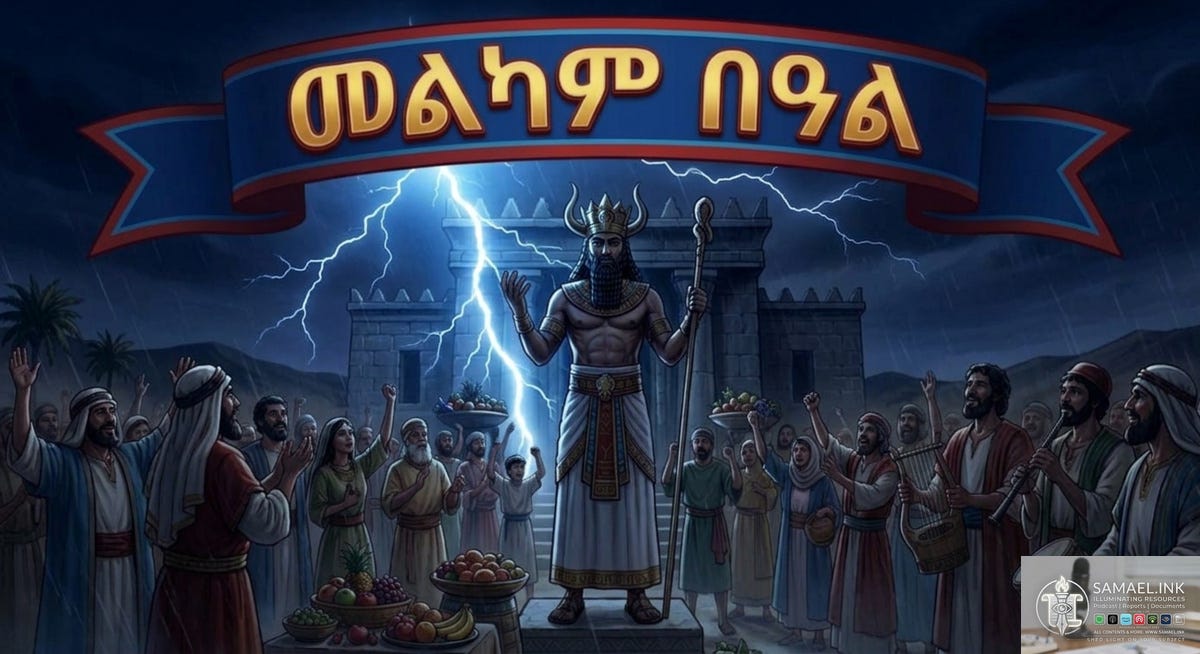
The Ugaritic Baal Cycle stages a theological and political reworking: Haddu’s raw atmospheric identity is domesticated into Baal, who insists on a house and becomes a palace‑resident ruler. Building a house fixes divinity to place and converts episodic spectacle into administrable sovereignty. Mythic victories—most notably Baal’s triumph over Mot—translate seasonal alternation into narrativeized political victories, sacralizing cyclical fertility and providing an ideological rationale for continuous protection and provisioning anchored in temple and palace.
Institutionally, this shift produces concrete economic and bureaucratic transformations: temples and palaces require maintenance, personnel, and mechanisms for storage and redistribution, turning sacred space into nodes of surplus management. The resident god enables ritual calendars, priestly offices, and anticipatory control (festivals, offerings) designed to secure future seasons, thereby transforming reactive religiosity into ongoing administrative practice and offering an archetype of kingship that legitimates territorial, inheritable sovereignty.
Comparatively, the Haddu→Baal transition exemplifies a recurrent pathway in political‑religious evolution: an event‑centered divine model becomes personified, located, and institutionalized as societies centralize and manage surplus. The epic functions as cultural technology repurposing spectacular natural imagery into ideological infrastructure that legitimates palace rule; older storm metaphors persist, but as legitimating ornamentation for an enduring polity rather than as the deity’s sole mode of being.
Daniel Schwemer reconceives the ancient Near Eastern storm‑god as a flexible theological type whose meteorological powers were repeatedly personified, adapted, and deployed across Mesopotamia, Syria, and Anatolia to meet local social, economic, and political needs. Drawing on philology, ritual texts, and iconography, he follows how figures such as Iškur, Hadda/Adad, and Taru/Tarhunt shift from ambiguous weather forces into assertive divine actors whose authority is mobilized to legitimize earthly rule. Parallel to this religious trajectory, the linguistic journey of the Semitic triliteral B‑ʿ‑L from Baʿal (lord/deity) through Aksumite Geʿez to Amharic ባለ‑ (bāle‑) illustrates how sacral concepts of lordship secularize and grammaticalize into everyday markers of possession and agency.
Schwemer foregrounds the storm’s essential ambivalence—both destructive and life‑giving—and shows how different ecological regimes produce distinct divine profiles. In irrigated southern Mesopotamia the storm’s religious presence centers on irrigation cycles, calendrical rites, and the maintenance of canals, reflecting Iškur’s integration with hydraulic agriculture; in the rain‑reliant uplands of Upper Mesopotamia, Syria, and Anatolia the storm‑god’s control over seasonal rains and crop fertility makes him a more central, sovereign figure whose cosmic authority resonates with dry‑farming economies. These environmental contrasts help explain why the same meteorological phenomenon is cast as a local guardian in some contexts and as a cosmic sovereign in others.
A core strand in Schwemer’s account is the transformation of meteorological potency into political theology. Recurring mythic narratives—especially the storm‑god’s battle against Sea or Water Monsters—are read not merely as cosmological tales but as templates for legitimating hierarchical power: the god who subdues chaos provides the model and mandate for kings who must impose order on nature and society. Schwemer traces this sacral endorsement across royal inscriptions, oath‑formulas, ritual enactments, and visual programs that routinely depict rulers within the storm‑god’s ambit, demonstrating how religious performance and material culture cohere to make divine weather mastery an ideological linchpin of sovereignty.
The Aksumite to Amharic case provides a linguistic analogue to Schwemer’s religious argument. The Semitic root B‑ʿ‑L, originally a theonym and title of divine lordship in the northwest Semitic world (Baʿal), is preserved and transformed in South Semitic environments. In Aksumite Geʿez inscriptions and administrative language the root appears with secularized senses—lord, master, steward—embedded in royal titulary and bureaucratic formulas. Over centuries of institutional use, substrate influence from Cushitic languages, and sociopolitical pressures favoring descriptive compounds, the lexical item reanalyzes and grammaticalizes in Amharic as the productive bound prefix ባለ‑ (bāle‑), encoding possession, agency, and professional status. The trajectory Baʿal → Geʿez lordship → Amharic bāle‑ shows how a sacral vocabulary of mastery can be repurposed into mundane linguistic tools of social organization.
Taken together, Schwemer’s synthesis and the B‑ʿ‑L lineage highlight a common dynamic: high‑status religious concepts and lexical items are not static relics but adaptive resources that states and societies repurpose—ritually, ideologically, and linguistically—to authorize authority and manage social life. The storm‑god’s metamorphoses and the grammaticalization of bāle‑ both illustrate processes by which divine or honorific registers are secularized and routinized, producing durable instruments of legitimacy, administration, and everyday meaning.
The Weight of the Blink: Rethinking Sovereignty in “Eigenblink” Terms
The “Eigenblink” framework treats divine power as a momentary, decisive event: a concentrated flash of sovereignty that collapses prior orders and legitimates new ones. Measured against sudden manifestation, legitimacy via the event, and sovereignty over chaos, this perspective privileges gods whose identity is inseparable from an instantaneous eruption of authority. To rank deities by how much “weight” they carry within this conceptual space is to favor those who are not administrators or slow providences, but embodied events: storms, lightning, and the singular moments that rewrite political and ecological order.
Criteria for Measuring “Weight”
Sudden manifestation asks whether a deity’s essential being coincides with an abrupt, perceptible event such as a storm or earthquake rather than a continuous presence. Legitimacy via the event considers whether authority is conferred primarily by an appearance, victory, or demonstration rather than by temple, lineage, or bureaucratic ritual. Sovereignty over chaos evaluates whether the deity’s power functions to dominate, reorder, or extract provisioning control from a chaotic, dangerous environment like floods, storms, or seasonal disruption. These axes privilege gods that operationalize disruption and legitimize sudden reordering over those who stabilize and administer ongoing provisioning systems.
Tiering the Gods by Eigenblink Weight
The heavyweights are deities whose arrival and authority are the flash. Baal (Hadad/Adad) embodies the quintessential storm-event in the ancient Near East; his power is performative and catastrophic, his manifestation remaking provisioning conditions so that being and event are one. The early conceptualization of Allah represents an abstraction of the blink into an omnipresent, absolute will; stripped of physical imagery, the divine event becomes immediate sovereignty that needs no icon. Tarhunt in the Hittite-Anatolian world, especially the lightning Tarhunt tied to flash floods and rain, functions as a guarantor of the provisioning lock: his manifestation carried cosmological terror and juridical authority linked to survive-or-die agricultural conditions.
Mid-weight figures deploy the blink but are constrained by institutional, anthropomorphic, or solar responsibilities. Zeus, the thunderer and sky-king, carries a thunderbolt but is heavily humanized and politicized; his thunder signals authority but is folded into the administrative and interpersonal dramas of Olympus, which mediates the raw event. Early Yahweh, in poetic layers where he appears as a marcher accompanied by earthquakes and storm imagery, can read as a blink-like force whose presence reshaped landscapes; over time Yahweh accrues temple, law, and static sovereignty that diminish the exclusive primacy of the sudden event.
Low-weight deities embody predictability, continuity, and process—qualities antithetical to Eigenblink. Shamash, the sun god associated with law, order, and the predictable march of day, undermines the immediacy and terror of the blink by representing bureaucracy, jurisprudence, and provisioning continuity. Enki/Ea, god of freshwater and wisdom, governs flows rather than shocks; his methods are gradual, secretive, and processual, lacking the sudden legitimating event that confers Eigenblink weight.
Comparative Weighting (Summary)
Baal stands as the purest storm-event and embodied sovereignty; in him the lightning and the sovereign act are inseparable. The early, abstracted notion of Allah converts the flash into absolute, omnipresent will. Tarhunt holds regional provisioning authority tied to lightning and flood. Zeus retains thunderous symbolism but is institutionalized and anthropomorphic. Shamash’s predictability and role in law and provisioning counterpose the blink.
The Pre-Epic Momentary God and the Ugaritic Transition
The case of Baal traces the shift from perfect momentary deity to domesticated divine king, illuminating how polities convert episodic authority into sustained sovereignty. In the earliest West Semitic layers, Haddu/Hadda functioned as the atmospheric break itself: a non-resident god summoned only during the event, with no fixed cultic geography. The deity’s identity could register onomatopoeically as the sound of thunder—he did not produce thunder as an instrument but was the thunder, collapsing agent and sign.
The Baal Cycle narrativizes the demand for a “house” and performs a symbolic-theological transformation from episodic agent to permanent sovereign node. Baal’s pursuit of a palace on Mount Saphon is a literal theological move to end his homelessness. The narrative defeat of Mot and the securing of cyclical provisioning make Baal’s victory the guarantee of seasonal fertility: the lightning bolt becomes one instrument among many of an enduring kingship.
Features Compared
In the pre-epic momentary phase the deity is an Eigenblink, pure event, moving within the shifting atmosphere where lightning is the deity’s body and legitimacy is immediate terror. In the Ugaritic/post-epic king phase the deity becomes an institutional ruler anchored to Mt. Saphon, where lightning is wielded as weaponry and legitimacy depends on house, cultic practice, and mythic victories.
Political-Theoretical Implications: Momentary Power vs Institutional Sovereignty
Momentary power is revolutionary and disruptive; it legitimates through spectacle, terror, and demonstrative victory. Such authority is exceptional, episodic, and often militarized or ecological in origin. Institutional sovereignty answers the demands of sedentarization: the palace, the temple, and fixed cult convert episodic charisma into a provisioning lock that guarantees irrigation, grain storage, taxation, and social reproduction. Schwemer’s arc, showing how regional flashes evolve into settled kingship, maps onto historical processes by which chiefdoms and early states transformed episodic military or ecological authority into administrative capacity.
Strategic Takeaway Applied to Contemporary Analysis
Interpreting modern geopolitical actors through Eigenblink categories clarifies the kinds of authority they attempt to claim in contested spaces like the Red Sea and the Horn of Africa. High-weight analogues are actors claiming decisive, shock-like authority through fast, disruptive, spectacular acts—military coups, sudden escalations, dramatic diplomatic assertions—that aim to act as Baal-like restorers of order. Low-weight analogues work through predictability, infrastructure, and legal-administrative networks and behave like Shamash; they stabilize rather than unsettle but exercise deep provisioning influence.
Heuristic examples suggest China often operates in a Shamash mode with long-term infrastructure and institutional ties. A regional sovereign such as Ethiopia must sometimes perform as a Baal-like actor to secure control over supply lines or to restore a provisioning lock, combining episodic coercion with institutional governance. External competitors or proxies may claim Eigenblink status by sponsoring sudden security disruptions or asymmetric operations intended to alter the local balance quickly.
Why the “Perfect Momentary God” Matters to Historical and Political Theory
The archetype explains how episodic acts of force or supernatural demonstration become templates for legitimizing political power. Early chiefs or war-leaders who could produce dramatic environmental or military events leveraged those spectacles into authority and then built institutions to secure what the event only temporarily granted. For historical sociology, the model clarifies one route from charismatic, sacralized violence to durable state institutions: from lightning-body to palace-house.
The Eigenblink approach privileges rupture and event as the decisive source of legitimation. Baal in his earliest attested function exemplifies the perfect momentary god: identity and event are coeval, and political authority is the immediate effect of a visible, terrifying occurrence. The Ugaritic domestication of Baal into a palace-holding king shows how societies translate episodic epiphany into continuous provisioning structures that sustain states. Applying the same lens to contemporary actors offers a heuristic for distinguishing those who aim to reshape orders through shock and spectacle from those who embed themselves in the slow infrastructures of power.
Haddu/Hadda: From Perfect Momentary God to Institutional King
Before the Ugaritic codification, Haddu/Hadda (the storm god later called Baal in the Baal Cycle) functions as a “perfect” momentary god: the unmediated epiphany of the storm. The later Ugaritic epics domesticate that raw, atmospheric force into a resident, ruling deity to meet the political and economic needs of sedentary, agricultural city‑states. Below is an expanded analytic account that situates the religious transformation in cultural, ritual, and material terms.
The momentary deity appears not as an occupant of temple precincts or an administrator of households and fields but as the storm itself — the audible, visible rupture in the sky that interrupts ordinary time. Haddu’s being is identical with the atmospheric rupture: thunder, lightning, the downpour. Where later cultic language treats gods as inhabitants with continuous presence, Haddu’s ontology is durational and contingent: he appears with the storm and recedes when the storm dissolves. The deity’s reality is instantiated only by that singular, overwhelming moment of atmospheric violence.
Linguistic traces suggest the theonym functions like onomatopoeia; Haddu/Hadda imitates thunder’s phonetic profile. This is not merely poetic: it encodes a different metaphysical relation between sign and referent, in which the god is not a cause behind the event but the event’s identity. The divine is neither mediated by ritual nor located in sacred architecture but is coextensive with a natural acoustico‑visual phenomenon. Early ritual responses to such a figure are reactive and situational — performances timed to seasonal storms, ephemeral rites performed at the moment of appearance, and communal practices that treat the storm as an immediate, terrifying presence rather than an ever‑watchful patron. Authority derived from terror and awe rather than institutional investiture.
Understanding Haddu’s momentary form requires attention to socioecological context. In societies with mobile herding, diffuse settlements, or low‑density agrarian villages, gods that are episodic and tied to climatic events suit lived experience. Authority that appears with a life‑saving rain but does not require permanent infrastructure matches social organization that is itself mobile or seasonally focused. Momentary gods legitimize by spectacle: the lightning and thunder validate claims of divine potency instantly without the need for lineage, temple endowments, or bureaucratic ritual to sustain authority. This modality of divinity supports leaders whose power is similarly episodic: charismatic warlords, ritual specialists, or seasonal chiefs whose authority waxes with environmental necessity. When a culture conceptualizes divinity as event rather than locus, religious knowledge emphasizes timing, reading omens, and responding to atmospheric signs — skills crucial for survival in variable climates.
The Ugaritic Baal Cycle preserves a decisive reworking: the storm‑god is reimagined as Baal, a palace‑resident, political ruler — a transformation with theological, social, and economic implications. Baal’s insistence on a house “like the other gods” is the foundational theological move. Constructing a palace (and by extension a temple) fixes divinity to a place. This is the translation of occasional, spectacular power into continuous, administrable sovereignty. The palace is a material and symbolic device that converts episodic appearances into permanent claims of protection, fertility, and political order. Natural alternations — rainy season and dry season — are dramatized as mythic opponents. Mot (Death), as the dry desiccating force, is not merely a climate phase but a character whose defeat validates Baal’s ongoing dominance. The narrative battle normalizes cyclic death and rebirth as episodes of political victory and restoration, thereby sacralizing seasonal agricultural rhythms within a political theology. Where older conceptions make lightning the god’s body, the epic recasts lightning as weaponry wielded by a coherent agent. This shift allows the god to be credited with intention, strategy, and legal claims — attributes necessary for an institutional ruler. Baal now acts, negotiates, builds, and rules; his power is transferable into human politics.
The mythic shift reflects and produces tangible changes in polity and cult. Fixed sacred architecture requires maintenance, personnel, and redistribution. Temples become nodes of economic activity: storage, redistribution, ritually sanctioned control over surplus. The “house” of Baal thus helps to create and justify an administrative apparatus that regulates grain, ritual labor, and civic obligations. A resident god enables ritual calendars, regular sacrifices, and priestly offices that manage seasonal expectations even in the absence of immediate divine spectacle. The community gains a mechanism of anticipatory control: festivals, offerings, and liturgies aim to secure the next rainy season through ongoing devotion rather than merely reacting to a storm when it comes. The language of kingship in the Baal Cycle maps divine sovereignty onto human rulers. A god with a palace offers an ideological model for earthly kings: sovereignty is anchored in place, perpetuated through institutions, and validated by mythic victories over cosmological chaos.
The Haddu to Baal transition illustrates a broader template in religious and political evolution. Momentary gods reveal a performative, situational religion oriented around events; institutional gods reflect bureaucratic religiosity oriented around continuity. The change indexes a shift in social complexity from mobile, event‑sensitive groups to sedentary, surplus‑managing polities. The Baal Cycle operates as cultural technology that retools powerful natural imagery to justify new social arrangements — centralized authority, temple economies, and regularized ritual. Yet older imagery survives within the new framework: lightning remains central, storm metaphors persist, but their function is altered. The spectacular becomes the legitimating ornament of an abiding institution.
This pattern is useful for comparative work across regions and periods. Similar processes appear worldwide when deities connected to weather phenomena become national patrons as societies settle and centralize. The mechanics are comparable: event becomes narrative personification, which becomes institutional residence, which becomes political legitimation. For studies tracing the genealogy of political religions, distinguishing “momentary” from “institutional” modalities sharpens analysis of how ritual, myth, and architecture underpin state formation. The Haddu model helps explain how charismatic, episodic authorities — regional war leaders or ritual specialists — were transformed into palace‑based monarchs whose legitimacy could be inherited and administered.
Therefore, before the Ugaritic epic codified him, Haddu/Hadda was the pure, unmediated epiphany of the storm — present in the thunderbolt and absent once the storm subsided. The Baal Cycle domesticates that immediacy, giving the storm‑deity a fixed house and a narrative of cosmic victory so that his power can be institutionalized and counted on year‑round — a theological innovation shaped by, and serving, the needs of sedentary agricultural polities.
From Baʿal to Bāle‑: Aksum as the linguistic bridge between Bronze‑Age lordship and modern Amharic possession
This section traces the longue durée of the Semitic triliteral B‑ʿ‑L (baʿal) from its earliest attested role as a Northwest Semitic theonym — “Baʿal,” lord/owner of storms and fertility in Ugaritic and Canaanite contexts — through its semantic and morphosyntactic transformations in the Ethiopic milieu, into the bound morpheme ባለ‑ (bāle‑) in modern Amharic that signals possession, agency, or professional status. I argue that Aksumite Geʿez inscriptions and later literary practice provide the crucial intermediate stage in which divine sovereignty was secularized into administrative and social “lordship,” and that contact with Cushitic substrates shaped how this lexeme grammaticalized into a productive prefix in Amharic.
Baʿal in the northern Semitic world
Title, deity, and lexical model Baʿal (NW Semitic bʿl) appears in Bronze‑Age sources — notably the Ugaritic Baal Cycle — as a polyvalent title and theonym: “owner,” “master,” “lord,” and, in mythic register, the storm and fertility god who controls rain and the earth’s fecundity. The word functions both as a proper name in cultic contexts (Baal Ṣap̄on, Baal of the mountain) and as a compositional element in personal and place names, where it indexes stewardship over a domain. This pattern establishes a semantic template: a lexical item denoting authority/possession used compositively to build status names or epithets.
Transmission southward
Semitic migration, contact, and retention From the late second millennium BCE onward, South Semitic dialects developed in the Arabian Peninsula and the Horn, carrying many Northwest Semitic roots into new phonological and sociolinguistic environments. The Horn’s Semitic varieties — Geʿez and later Amharic among them — inherited a large portion of the Semitic lexicon but adapted forms and functions under intense contact with Cushitic (Agaw) languages and unique institutional conditions (royal courts, Christianization, monastic literatures). That confluence made the region a likely locus for preserving archaic lexical items while also subjecting them to novel grammatical pressures.
Aksumite Geʿez
Inscriptional evidence and the secularization of lordship Aksum (c. 100–940 CE) furnishes our most direct epigraphic window into the transition. Aksumite Geʿez inscriptions and administrative formulas regularly employ terms derived from the B‑ʿ‑L root to designate social rank, possession, or domains of authority rather than a foreign storm deity. Examples from inscriptions and royal titulary show the root functioning as an honorific or designation of stewardship (e.g., forms glossed as “lord/master of X,” used for spoils, territories, or offices). The inscriptional register thus demonstrates a secular, administrative valence already well established in Late Antique Ethiopia, consistent with studies that locate many of the modern possessive and titular meanings in the Geʿez stage. The epigraphic and manuscript tradition of Aksum and later Geʿez literatures preserves these senses while transmitting the lexical material into later vernaculars.
Geʿez semantics and the “feast” meaning
Philologists have observed a notable semantic narrowing and occasional shift in Geʿez: alongside “owner/master,” forms derived from B‑ʿ‑L also denote festivals or days associated with a saint or lord (a “lord’s day” or feast), suggesting a ritualized extension of possession onto time. This semantic vector — ownership → sanctioning of time/events — plausibly aided the term’s broader generalization from personal lordship to categories of belonging, membership, and social role in subsequent stages. Leslau and other comparative studies document these senses in Geʿez lexical entries and later glosses.
Grammaticalization in Amharic
From free noun to bound prefix ባለ‑ (bāle‑) In Amharic the reflex ባለ‑ (bāle‑) functions productively as a modifier that yields compound nouns expressing possession, professional capacity, or authority: ባለቤት (bālebēt, “house‑owner/spouse”), ባለመኪና (bāle‑mekīnā, “car owner”), ባለሀብት (bāle‑habt, “rich person/holder of wealth”), ባለሙያ (bāle‑mūya, “professional, holder of a skill”), and so on. Structurally, bāle‑ supplies an attributive head that converts a noun into a possessor/agent noun. Where many Northern Semitic languages mark possession through the construct-state or genitival morphology, Amharic favors descriptive compounds; the bāle‑ prefix is a canonical example of such a compensatory strategy. Comparative grammars and descriptive studies characterize this development as classical grammaticalization: lexical noun > relational noun > bound morpheme with generalized possessive/agentive semantics.
Socio‑linguistic mechanisms: substrate influence and administrative need Two forces account for the particular trajectory in the Ethiopian Highlands. First, contact with Cushitic (Agaw) languages that prefer head‑final, descriptive compounding likely encouraged speakers of Ethio‑Semitic to adopt prefixal or compound strategies rather than the Semitic construct‑state. Second, the socio‑political structures of Aksum — centralized administration, land tenure, ecclesiastical patronage — created a pragmatic demand for productive lexical means to generate administrative titles and occupational descriptors. Scholars such as Appleyard emphasize that substrate syntactic preferences and administrative exigencies jointly shaped the reanalysis of the B‑ʿ‑L root into a bound possessor/agentive marker.
Continuity and divergence: what was preserved, what changed Continuity: the core semantic nucleus — control/ownership/mastery — remains remarkably stable across millennia and geographies. The lexical lineage from Ugaritic Baʿal to Geʿez and then to Amharic bāle‑ demonstrates a preservation of conceptual content even when the referent shifts from god to human official to grammatical marker.
Divergence: the primary divergence is functional. In the Levant Baʿal often names a deity and functions theonymically and onomastically; in the Ethiopian context the root becomes secular, administrative, and finally grammatical. Phonological and orthographic adaptations (e.g., Geʿez script and later Amharic orthography) also reshape surface form and prosody.
Evidence and limits
The argument rests on three complementary kinds of evidence:
Bronze‑Age Northwest Semitic texts and onomastics showing bʿl as a compositional element of lordship.
Aksumite epigraphy and Geʿez lexica attesting B‑ʿ‑L meanings in administrative, social, and ritual contexts rather than as foreign theonyms. Scholarly overviews of Aksumite inscriptions and Geʿez manuscripts document these usages and continuity of sense.
Modern Amharic lexical patterns and grammars showing ባለ‑ as a bound morpheme expressing possession/agency; comparative dictionaries and descriptive grammars trace the reflex to Geʿez and to the Semitic triliteral root.
Caveats: direct, continuous documentary evidence linking specific Aksumite inscriptions to the eventual grammaticalization in colloquial Amharic is necessarily inferential: corpus gaps and later manuscript revision mean that some intermediate stages are under‑documented. Moreover, competing explanations stress direct inheritance from Geʿez social lexicon (rather than an Aksumite administrative innovation) or convergent development under substrate pressure; these are not mutually exclusive and likely operated together.
Broader implications for Afroasiatic historical linguistics
This case study is valuable for understanding how a high‑status religious lexeme can become an everyday grammatical operator when (a) it is lexicalized into institutional registers (administration, law, ritual), (b) contact languages provide typological models that favor particular morphological strategies, and (c) written/epigraphic traditions preserve the lexeme long enough for reanalysis to become sociolinguistically entrenched. The bāle‑ development illustrates grammaticalization in a contact setting and the resilience of semantic cores across genre shifts (myth → administration → grammar).
Conclusion
The route from Ugaritic Baʿal to Amharic bāle‑ is best understood as a gradual, contact‑mediated refunctionalization: an ancient title of lordship, preserved in Geʿez inscriptions and literary practice, underwent semantic broadening and formal reduction until it became a productive prefix in Amharic for possession and agency. Aksumite Geʿez stands as the crucial intermediary stage where theonymic prestige yielded to bureaucratic and social usage — the “missing link” that flattens divine mastership into the linguistic tools of everyday stewardship.
The Storm God as Destroyer and King

This scholarly text explores the complex history and religious significance of storm-gods across the Ancient Near East, focusing on regions like Mesopotamia, Syria, and Anatolia. The author, Daniel Schwemer, provides a detailed synthesis of various divine figures, such as the Sumerian Iskur and the Semitic Hadda, while distinguishing them from other dei…
What precisely does “Eigenblink” mean and how does it differ from Weberian charisma as used in political theory?
Eigenblink designates sovereignty as an instantaneous, embodied event—the divine or political flash that collapses prior orders—whereas charisma often describes ongoing personal authority rooted in perceived exceptional qualities; Eigenblink emphasizes the performative rupture rather than sustained personal magnetism.
How can a storm or lightning be considered the identity of a deity rather than merely its instrument?
In the pre-epic mode described for Baal, textual and ritual practice present the god as non-resident and manifest only in the atmospheric event, so the sensory occurrence (thunder, lightning) is not an effect but the deity’s presence, collapsing sign and agent.
Does the conversion from momentary god to palace-holding king erase the original Eigenblink quality?
Not completely; the momentary event is refunctionalized—ritual, myth, and architecture domesticate the flash so that episodic demonstrations become legitimating precedents within an institutional framework rather than disappearing wholesale.
Why are gods of law and provision considered low-weight in Eigenblink terms despite their crucial social roles?
Because the Eigenblink metric privileges sudden, legitimating events; gods of law and provisioning exercise authority through predictability, process, and infrastructure that secure reproduction over time rather than by spectacular rupture.
Can a deity occupy different weights in different historical layers or cultural contexts?
Yes; Yahweh’s poetic, storm-accompanied layers register a higher Eigenblink weight that is later attenuated by temple, law, and territorial sovereignty—showing that weight is historically variable.
How does the Eigenblink model help explain state formation in ecological terms?
Episodes that secure seasonal provisioning (victories over drought, flood control) can be ritualized into claims to ongoing governance; episodic ecological mastery thus becomes a foundation for institutions that manage resources and reproduction.
Are there modern political actors that clearly map onto the Baal-like category?
Actors that pursue rapid, spectacular disruptions—coups, dramatic military escalations, or sudden assertions of sovereignty—function as high-weight analogues in the Eigenblink heuristic.
Does emphasizing Eigenblink risk privileging violent or spectacular forms of power in analysis?
It is a descriptive heuristic highlighting one dimension of legitimation; analysts should balance it with attention to provisioning, law, and institutions to avoid normative bias toward spectacle.
How would you operationalize Eigenblink weight for comparative research across cultures?
Use indicators such as frequency of storm/event theophanies in textual sources, ritual presence tied to episodic crises, absence of fixed cultic centers, and subsequent narrative moves toward palace-building or temple-formation to create a comparative scale.
Could a polity deliberately cultivate Eigenblink legitimacy alongside institutional governance?
Yes; rulers often perform episodic spectacular acts (ritual demonstrations, military displays) to replenish the legitimacy generated by everyday institutional provision, combining high- and low-weight strategies.
What does it mean to say the thunder is the god rather than the god causes thunder?
It means the deity’s identity is coextensive with the sensory event: linguistic and ritual evidence portray the storm as the god’s presence, not as an effect produced by an underlying supernatural agent.
How do mobile or seasonally organized societies favor momentary gods?
Their social organization and ecological dependence reward episodic, responsive authority—divine appearances tied to critical weather events match leadership that rises and falls with environmental need.
Why does building a house change a deity’s social function?
Fixing divinity to a place converts episodic legitimacy into continuous claims over territory and provisioning, enabling bureaucratic practices—storage, priesthoods, ritual calendars—that reproduce sovereignty beyond single events.
Does the Baal Cycle simply erase older imagery of Haddu?
No; it repurposes storm imagery—lightning and thunder remain central but become instruments and legitimating symbols within a narrative and institutional framework rather than constituting the deity’s sole mode of being.
How does the palace‑residence model produce economic effects?
Temples and palaces act as centers for redistribution and surplus management, creating obligations, labor roles, and material infrastructures that underpin state formation and civic order.
Can momentary divine authority be inherited or administered?
Not in its raw form; it must be ritualized and anchored—through myths, houses, and offices—to generate inheritable and administrable legitimacy, which is precisely what the Baal Cycle models.
Is this pattern found outside the Levant?
Yes; the event→personification→residence→institution pathway recurs cross‑regionally where sedentary surplus economies and centralization rework weather or event deities into national patrons.
What kinds of evidence indicate a pre‑epic momentary deity in texts and ritual?
Absence of fixed cult centers, onomatopoetic theonyms, situational rites tied to storms, and narrational portrayals of non‑resident epiphanies signal a momentary modality.
How does the narrative defeat of Mot function politically?
It mythicizes seasonal desiccation as a vanquishable opponent, thereby legitimating continuous agricultural provisioning and the political authority that claims to secure it.
Could rulers deliberately cultivate traces of momentary deity power after institutionalization?
Yes; institutional rulers often appropriate spectacular language and rites—storm metaphors, ritualized displays—to replenish charismatic legitimacy while maintaining administrative structures.
What is Schwemer’s central claim about the storm‑god and why does it matter?
Schwemer argues that the “Weather‑God” is a theological type rather than a single immutable deity: a set of related but locally inflected divine roles that communities deploy to make sense of meteorological power. This matters because it reframes comparative religious history from tracing one‑to‑one deity identities to analyzing adaptive functions—how environmental pressures, economic strategies, scribal cultures, and interstate contacts shape divine roles and, crucially, how those roles are instrumental in legitimizing political authority.
How does environmental context alter the storm‑god’s character?
Environmental regimes determine which aspects of storm power communities prioritize. In lowland, irrigation‑dependent southern Mesopotamia, textual and ritual attention centers on canal maintenance, seasonal festivals tied to water control, and a deity integrated into agricultural calendrics (Iškur). In contrast, upland and dry‑farming regions—Upper Mesopotamia, northern Syria, Anatolia—place premium value on seasonal rains and fertility; there the storm‑figure becomes a more assertive cosmic actor whose mastery over rain, storms, and the disordering sea legitimates claims to supreme divine status and, by extension, royal primacy.
Why is the storm‑god ambivalent and how is that resolved in religious practice?
Storms both destroy and renew: lightning and floods can devastate, but rain is essential for crops. Religious systems resolve this ambivalence by personifying storms as deities whose favor must be ritually secured and whose wrath must be averted. Rituals, liturgies, and offerings channel the unpredictable into predictable social procedures: festivals, divination, temple economies, and royal cults institutionalize relations with the deity so that seasonal hazards become governable through sacred reciprocity.
What role do myths—especially the Sea/Water Monster conflict—play in political theology?
Myths in which the storm‑god defeats a sea or water monster function as paradigms of cosmic ordering: the deity’s victory establishes a cosmos hospitable to agriculture and society. Politically, these narratives provide an archetype for kingship—the king mirrors the god by imposing order, warding off chaos, and administering resources. The mythic victory is reframed in inscriptions, ritual oaths, and coronation performances so that the monarch is portrayed as invested with the deity’s authority, making divine weather mastery the theological foundation of royal legitimacy.
How do rituals and royal performance concretely connect kings to the storm‑god?
Royal inscriptions, oath formulas, dedicatory acts, and ritual calendars routinely name the storm‑god as patron, witness, or guarantor of kingship. Coronation rites, state festivals, and temple economics stage the king as subordinate to and beneficiary of divine power: the king receives regalia, epithets, or symbols sanctioned by the deity, and public ceremonies dramatize the transfer or confirmation of authority. Material culture—temple reliefs, royal stelae, storm‑god iconography paired with royal imagery—visualizes this ideological bond so the polity’s hierarchy is perceived as cosmically grounded.
How does Schwemer treat textual and scribal variation in his comparative readings?
He combines close philological analysis with attention to genre, scribal transmission, and local scribal practices, arguing that differences across texts often reflect situational registers (liturgical vs. royal vs. mythic) and scribal conventions rather than wholly separate theological worlds. By triangulating inscriptions, ritual manuals, and literary compositions, he reconstructs both shared motifs and local inflections while acknowledging fragmentary and uneven documentation.
What is the relation between iconography and theological type?
Iconographic motifs—lightning bolts, bulls, mountain‑thrones, storm weapons—constitute a symbolic repertoire that various polities adopt, adapt, or abbreviate to express the storm‑god’s authority. Visual themes corroborate textual claims about attributes and functions; variations in depiction correspond to local emphases (e.g., martial prowess, pastoral fertility, sovereign regalia), making iconography a crucial corroborative strand in arguing for a flexible theological type rather than a single identity.
Does Schwemer claim a unilineal diffusion of storm cults?
No; he rejects simple diffusionist models. Instead he posits a pan‑regional type shaped by repeated episodes of contact, translation, and local innovation: shared narrative and ritual templates circulate, but each community retools them in light of specific economic needs, political ideologies, and environmental constraints.
How does the Baʿal → Geʿez → Amharic bāle‑ trajectory relate thematically to Schwemer’s study?
Both cases exemplify how high‑status religious lexemes and religious figures get secularized and institutionalized. Baʿal begins as a divine lord tied to storm and fertility; in Aksumite Geʿez it appears in administrative and titulary contexts as an honorific and descriptor of stewardship; in Amharic it grammaticalizes into ባለ‑ (bāle‑), a bound morpheme marking possession, professional role, or agency. This linguistic pathway mirrors the religious process where divine mastery of natural forces is reframed as a principle of human lordship and administrative authority.
What evidence supports the Aksumite intermediary stage?
Aksumite epigraphy and Geʿez inscriptions show the B‑ʿ‑L root used in non‑theonymic, bureaucratic senses—titles, territorial designations, and honorific formulas—indicating a stage where the divine sense of lordship is secularly institutionalized. Manuscript traditions and lexica in Geʿez preserve those senses, and the administrative contexts of Aksum furnish plausible mechanisms (royal court language, land tenure lexicons) for the shift from theonomastic to bureaucratic usage.
How did Cushitic substrates and sociopolitical structures influence grammaticalization into bāle‑?
Cushitic (Agaw) languages favor descriptive compounding and head‑final structures; contact with these substrates likely encouraged analytic and compound strategies in Ethio‑Semitic speech communities. Simultaneously, the bureaucratic exigencies of Aksum—titles, landholding records, clerical registers—created functional pressure for reliable lexical tools to form possession and agent nouns. Together, typological contact and administrative utility facilitated reanalysis from lexeme to bound prefix.
What are the semantic stages in the B‑ʿ‑L lineage?
The semantic progression runs from a theonymic/title sense (owner/lord; divine master) to administrative and honorific senses (lord/master of X; steward, proprietor) in epigraphic and literary Geʿez, and finally to a grammaticalized bound prefix in Amharic expressing possession, agency, and professional identity—showing continuity of conceptual content (mastery/possession) across functional shifts.
What methodological parallels unite the religious and linguistic cases?
Both inquiries rely on triangulating textual, epigraphic, and material evidence and on situating lexical/theological items in their socioecological and institutional matrices. They emphasize longue durée processes, contact dynamics, and functional reanalyses—how elite registers (theological or titular) bleed into administrative practice and then into vernacular grammar or commonplace ideology.
What limitations and inferential gaps remain in both arguments?
Both syntheses contend with fragmentary corpora and uneven chronological depth: many transitions are documented indirectly and require parsimonious inference. For the storm‑god, gaps in regional textual sequences complicate mapping exact lines of influence; for B‑ʿ‑L, direct documentary continuity between specific Aksumite forms and later spoken Amharic stages is partly under‑attested, making the intermediary path probable but not exhaustively documented.
How do these transformations affect our understanding of authority in ancient societies?
They show that authority is often ritualized and routinized through symbolic technologies—myth, ritual, titulary, and lexical forms—that migrate from sacred to secular spheres. Divine mastery becomes a template for human governance; linguistic markers of lordship become bureaucratic tools; both processes institutionalize asymmetries of power and make them appear natural, cosmically sanctioned, and linguistically entrenched.
What broader comparative lessons do these cases offer?
They exemplify general mechanisms by which sacral concepts become social instruments: prestige lexical items and narratives are retained in elite registers, refunctionalized by administrative and ritual practice, and may ultimately grammaticalize or become everyday idioms. Such transformations are common where literacy, state structures, and language contact converge—an analytic lens applicable beyond the Near East and Horn of Africa.
Who benefits from reading Schwemer and following the B‑ʿ‑L lineage?
Historians of religion, philologists, linguists, and political anthropologists gain models for tracing how theological concepts map onto institutional power and language change; archaeologists and art historians gain frameworks for interpreting material and iconographic evidence as components of political theology and administrative practice.
What new research directions do these syntheses suggest?
Comparative microhistories of regional ritual performance, closer philological study of peripheral inscriptions, corpus expansion for Aksumite administrative texts, and experimental typological work on grammaticalization under substrate contact would all help tighten causal links between sacral lexemes, bureaucratic practice, and eventual grammar.
How might one redescribe “divinity” and “lordship” after these studies?
Divinity and lordship emerge less as ontological absolutes and more as functional categories—social technologies whose authority depends on repeated ritualization, linguistic codification, and institutional anchoring. Studying them as procedural and transferable capacities clarifies how societies naturalize inequality and governance.
What does this tell us about continuity and change across millennia?
Both cases show remarkable semantic continuity (mastery/ownership) alongside profound functional change: identities and words endure in meaning while their social loci shift—from temple to palace to administrative register to everyday grammar—demonstrating cultural resilience coupled with adaptive repurposing.
How do these arguments affect the way we read ancient inscriptions and myths?
They encourage reading inscriptions and myths as active instruments of social engineering: not only records of belief but performative texts that produce, reproduce, and legitimize institutions. The interpretive emphasis shifts from identifying static gods or lexemes to tracing processes by which symbols are mobilized to shape social reality.
What practical steps would strengthen the empirical case for both theses?
Expanding searchable corpora of inscriptions, integrated philological databases linking ritual, administrative, and literary texts, targeted excavations aimed at uncovering ritual contexts and administrative archives, and interdisciplinary workshops combining linguists, philologists, and archaeologists would yield tighter evidence chains and clearer diachronic mappings.
What is the single most persuasive takeaway when both narratives are read together?
Religious and linguistic forms of “lordship” are durable yet transformative: prestige symbols of divine mastery can be secularized and grammaticalized, and the storm‑god’s mythic authority can be converted into procedural tools for ruling—showing how societies convert cosmic metaphors into pragmatic instruments of governance and everyday speech.
Footnotes / Endnotes
Daniel Schwemer, “The Storm-Gods of the Ancient Near East: Summary, Synthesis, Recent Studies,” Part I, Journal of Ancient Near Eastern Religions 5, no. 1 (2005): 1–40; Part II, Journal of Ancient Near Eastern Religions 8, no. 1 (2008): 1–44. See also Daniel Schwemer, Die Wettergottgestalten Mesopotamiens und Nordsyriens im Zeitalter der Keilschriftkulturen (Wiesbaden: Harrassowitz, 2001).
Wilhelm Winkler, “Die Baal-Zyklen von Ugarit,” Zeitschrift für Assyriologie 34 (1924): 1–45; Alfred Jeremias, The Old Testament in the Light of the Ancient East, trans. D. M. Paton, 2 vols. (London: Luzac & Co., 1911–1913).
Frank Moore Cross, Canaanite Myth and Hebrew Epic: Essays in the History of the Religion of Israel (Cambridge, MA: Harvard University Press, 1973), 105–140.
Mark S. Smith, The Origins of Biblical Monotheism: Israel’s Polytheistic Background and the Ugaritic Texts (New York: Oxford University Press, 2001), 45–78.
Max Weber, Economy and Society: An Outline of Interpretive Sociology, ed. Guenther Roth and Claus Wittich, 2 vols. (Berkeley: University of California Press, 1978), 212–229.
Wolf Leslau, Comparative Dictionary of Geʿez (Classical Ethiopic): Geʿez-English/English-Geʿez with an Index of the Semitic Roots (Wiesbaden: Harrassowitz, 1987), 78–79.
Wolf Leslau, Concise Amharic Dictionary (Berkeley: University of California Press, 1976), 42–43.
Roger Schneider, “Notes on the Royal Aksumite Inscriptions,” in Ethiopists and Semitists: Proceedings of the 14th International Conference of Ethiopian Studies, ed. Taddese Beyene et al. (Addis Ababa: Institute of Ethiopian Studies, 2000), 112–125. See also August Dillmann, Ethiopic Grammar, 2nd ed., trans. J. C. Greenfield (London: Williams and Norgate, 1899).
David L. Appleyard, “Amharic,” in The Semitic Languages, ed. Robert Hetzron (London: Routledge, 1997), 365–388.
Giorgio Agamben, Homo Sacer: Sovereign Power and Bare Life, trans. Daniel Heller-Roazen (Stanford: Stanford University Press, 1998); Carl Schmitt, Political Theology: Four Chapters on the Concept of Sovereignty, trans. George Schwab (Chicago: University of Chicago Press, 2005).
Francis Fukuyama, Political Order and Political Decay: From the Industrial Revolution to the Globalization of Democracy (New York: Farrar, Straus and Giroux, 2014), 15–45.
Bibliography
Primary Sources & Ancient Texts
The Baal Cycle. In Ugaritic Narrative Poetry, edited by Simon B. Parker, 43–92. Atlanta: Scholars Press, 1997.
Dillmann, August. Ethiopic Grammar. 2nd ed. Translated by J. C. Greenfield. London: Williams and Norgate, 1899.
Jeremias, Alfred. The Old Testament in the Light of the Ancient East. Translated by D. M. Paton. 2 vols. London: Luzac & Co., 1911–1913.
The Royal Aksumite Inscriptions. Edited by A. F. L. Beeston. London: Oxford University Press, 1974.
Secondary Sources
Agamben, Giorgio. Homo Sacer: Sovereign Power and Bare Life. Translated by Daniel Heller-Roazen. Stanford: Stanford University Press, 1998.
Appleyard, David L. “Amharic.” In The Semitic Languages, edited by Robert Hetzron, 365–388. London: Routledge, 1997.
Cross, Frank Moore. Canaanite Myth and Hebrew Epic: Essays in the History of the Religion of Israel. Cambridge, MA: Harvard University Press, 1973.
Fukuyama, Francis. Political Order and Political Decay: From the Industrial Revolution to the Globalization of Democracy. New York: Farrar, Straus and Giroux, 2014.
Hetzron, Robert, ed. The Semitic Languages. London: Routledge, 1997.
Jeremias, Alfred. The Old Testament in the Light of the Ancient East. Translated by D. M. Paton. 2 vols. London: Luzac & Co., 1911–1913.
Leslau, Wolf. Comparative Dictionary of Geʿez (Classical Ethiopic): Geʿez-English/English-Geʿez with an Index of the Semitic Roots. Wiesbaden: Harrassowitz, 1987.
———. Concise Amharic Dictionary. Berkeley: University of California Press, 1976.
Parker, Simon B., ed. Ugaritic Narrative Poetry. Atlanta: Scholars Press, 1997.
Schmitt, Carl. Political Theology: Four Chapters on the Concept of Sovereignty. Translated by George Schwab. Chicago: University of Chicago Press, 2005.
Schneider, Roger. “Notes on the Royal Aksumite Inscriptions.” In Ethiopists and Semitists: Proceedings of the 14th International Conference of Ethiopian Studies, edited by Taddese Beyene et al., 112–125. Addis Ababa: Institute of Ethiopian Studies, 2000.
Schwemer, Daniel. Die Wettergottgestalten Mesopotamiens und Nordsyriens im Zeitalter der Keilschriftkulturen. Wiesbaden: Harrassowitz, 2001.
———. “The Storm-Gods of the Ancient Near East: Summary, Synthesis, Recent Studies.” Part I. Journal of Ancient Near Eastern Religions 5, no. 1 (2005): 1–40.
———. “The Storm-Gods of the Ancient Near East: Summary, Synthesis, Recent Studies.” Part II. Journal of Ancient Near Eastern Religions 8, no. 1 (2008): 1–44.
Smith, Mark S. The Origins of Biblical Monotheism: Israel’s Polytheistic Background and the Ugaritic Texts. New York: Oxford University Press, 2001.
Weber, Max. Economy and Society: An Outline of Interpretive Sociology. Edited by Guenther Roth and Claus Wittich. 2 vols. Berkeley: University of California Press, 1978.
Winkler, Wilhelm. “Die Baal-Zyklen von Ugarit.” Zeitschrift für Assyriologie 34 (1924): 1–45.