
TL;DR:
If you trace the lineage of any person living in Germany today—from the Baltic coast to the Bavarian Alps—the path eventually leaves Europe entirely. Scientific evidence from genetics, paleoanthropology, and geology confirms that the biological foundation of every German citizen is rooted in the African continent.
The story of "the German" is, in fact, a very recent chapter in a much older African epic.
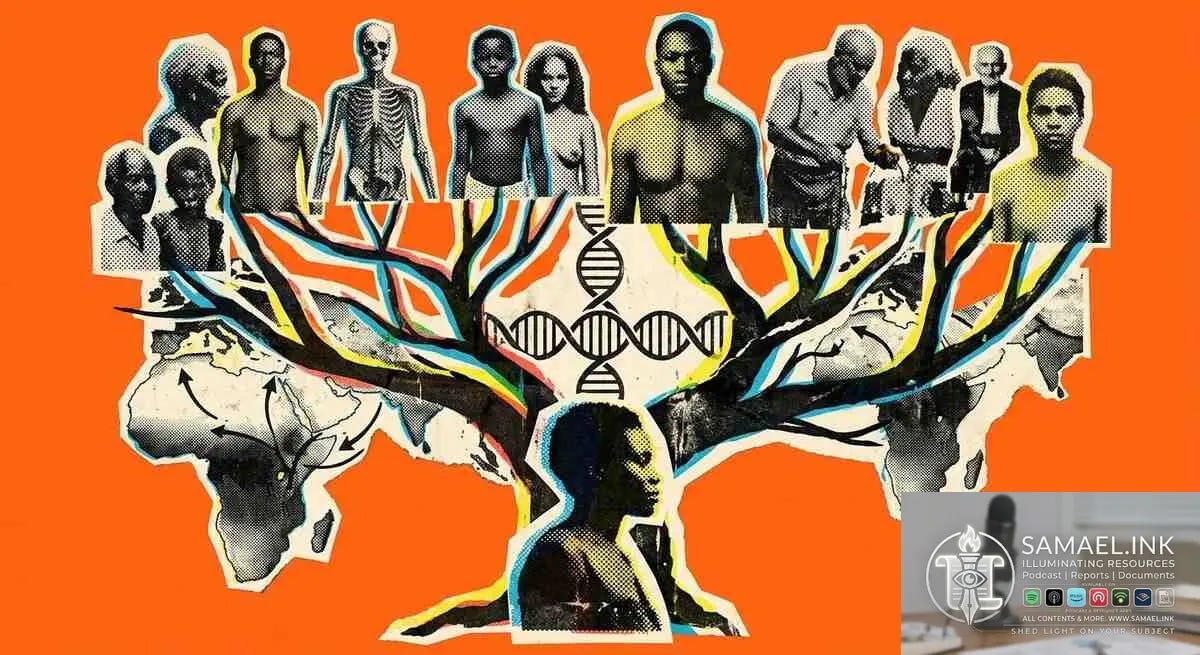
The Blueprint was Made in the Afar
While fossils like Danuvius guggenmosi (German: Danuvius guggenmosi) show that ancient apes in Europe experimented with standing upright roughly 11.6 million years ago, that lineage was an evolutionary "dead end." It did not lead to modern humans.
The "successful" model of humanity—the one that survived and eventually populated Berlin, Hamburg, and Munich—was engineered in the Afar Triangle (Afar: Qafar, Amharic: አፋር) of Ethiopia. It was here, and in the surrounding East African Rift Valley, that ancestors like Australopithecus afarensis (around 3.2 million years ago) perfected the obligate bipedalism (upright walking) that defines every human alive today.
The Great African Diaspora
The ancestors of modern Germans did not arrive in Europe as a new species created there. Instead, they arrived as part of successive waves of migration from Africa:
The First Movers: Roughly 1.8 million years ago, Homo erectus (Arabic: إنسان منتصب, romanized: Insān Muntaṣib) became the first to leave Africa. Their descendants in Europe eventually became the Neanderthals—a "cousin" lineage that lived in Germany for hundreds of thousands of years but ultimately disappeared.
The Modern Wave: All modern Germans are descendants of Homo sapiens (Arabic: الإنسان العاقل, romanized: al-insān al-ʿāqil) who stayed in Africa until roughly 60,000 to 90,000 years ago.
Genetic Proof: The African Mother
Every German carries a "biological passport" in their cells called Mitochondrial DNA (mtDNA). Because this DNA is passed down only from mothers, scientists can trace it back to a single ancestral group in Africa, often referred to as "Mitochondrial Eve."
While Germans may belong to specific European Haplogroups (like H, U, or J), these are merely younger branches of the massive African L trunk. Genetically speaking, the diversity found within a single village in Africa is often greater than the genetic diversity of the entire European continent. Europe represents a "subset" of African genetics.
The Adaptation of Skin
The physical traits often associated with being "German"—such as lighter skin, hair, or blue eyes—are very recent adaptations. When the first modern humans arrived in Europe from Africa, they possessed dark skin, which was necessary in the African sun to protect against UV radiation.
As these African pioneers moved into northern latitudes like the territory of modern-day Germany, their skin evolved to be lighter to absorb more Vitamin D from the weaker sunlight. These are surface-level adaptations to a new environment, not a change in fundamental ancestry.
Summary Table: The African Roots of Germany
Ultimately, the distinction between "African" and "German" is a matter of time, not biology. At the fundamental level of DNA and bone, every human being on the planet is a displaced African.
The Rift Valley: The True Engine of Sapiencization

The transition from the “1.0” Eurasian lineages to the Sapiens 2.0 (الإنسان العاقል) model was defined by a massive expansion of the Prefrontal Cortex (PFC), a biological “charge” that transformed the Rift Valley into a high-pressure laboratory for cognitive flexibility. Unlike the Ice-Age-adapted Neanderthals who specialized in physical sensory-motor sy…
The Persistence of the Rift: How East Africa Engineered the Human Runner

Around 1.9 million years ago, the East African Rift Valley served as the laboratory for a biological revolution: the transition of Homo erectus (Arabic: إنسان منتصب) from a primate walker to the world’s first endurance runner. This total re-engineering of the body utilized a specialized "spring" architecture—including the